Table of Contents
ToggleElectrical fires account for an estimated 51,000 home blazes each year, according to the National Fire Protection Association. Most of these could’ve been prevented with basic maintenance. Regular electrical checks aren’t about paranoia, they’re about catching loose connections, outdated protection, and overloaded circuits before they become hazards. This checklist breaks down what homeowners can handle themselves, what needs professional attention, and how often each task should be on the radar.
Key Takeaways
- Electrical preventive maintenance checklists help prevent an estimated 51,000 home fires yearly by catching loose connections, outdated protection, and overloaded circuits before they become hazards.
- Monthly testing of GFCI and AFCI devices, quarterly inspections of visible wiring, and annual professional reviews protect against fire risk, electrocution, and equipment damage.
- Monthly GFCI/AFCI tests, tightening terminal screws, and inspecting outlets for warm spots or charred insulation are homeowner tasks that prevent arcing and overheating without professional help.
- Professional electrical inspections every 3–5 years cost $200–$400 and reveal hidden threats like hot spots in wiring, aluminum wiring deterioration, and undersized service panels that DIY checks can’t detect.
- Documenting every inspection, repair, and upgrade with timestamped records proves due diligence for insurance claims and increases home resale value.
- Seasonal electrical maintenance—inspecting outdoor outlets after winter, monitoring AC circuits in summer, and testing heaters before winter—prevents costly emergencies tied to temperature and usage swings.
Why Electrical Preventive Maintenance Matters for Homeowners
Electrical systems degrade silently. Connections loosen over time from thermal expansion and contraction. Breakers weaken after tripping repeatedly. Insulation on wiring becomes brittle, especially in older homes with cloth-wrapped or knob-and-tube systems still in service.
Ignoring these issues invites three main problems: fire risk from arcing faults and overheating, electrocution hazards from exposed conductors or failed ground paths, and equipment damage when voltage irregularities fry electronics and appliances. Insurance claims for electrical fires average over $50,000 in property damage, not counting personal injury.
Preventive maintenance costs a fraction of reactive repairs. A service panel inspection runs $150–$300. Rewiring a room after a fire? Try $2,000–$8,000 per room, plus remediation, lost belongings, and temporary housing. The National Electrical Code (NEC) evolves every three years, and homes built before modern safety standards often lack ground fault protection, arc fault protection, and adequate circuit capacity for today’s loads.
Homeowners who follow structured maintenance strategies catch issues early, reduce insurance premiums through documented upkeep, and avoid the chaos of emergency repairs.
How Often Should You Perform Electrical Maintenance?
Frequency depends on the home’s age, occupancy, and usage patterns. Here’s a practical schedule:
Monthly:
- Test all GFCI and AFCI devices (more on this below)
- Check for warm or discolored outlets and switches
- Verify outdoor lighting and GFCI receptacles function properly
Quarterly:
- Inspect visible wiring in basements, attics, and garages for damage
- Test smoke and carbon monoxide detectors (replace batteries if needed)
- Check for flickering lights or tripping breakers, which signal overload or loose connections
Annually:
- Tighten all accessible terminal screws in outlets and switches (power off first)
- Inspect the service panel for rust, moisture, or unusual odors
- Review circuit directory labels for accuracy
- Clean dust and debris from panel interiors (with power off, or hire an electrician)
Every 3–5 Years:
- Professional electrical inspection, especially for homes over 25 years old or after major renovations
- Infrared thermography scan to detect hot spots in wiring and panels
- Update anyknob-and-tube or aluminum wiring if present
Homes with heavy loads, home offices, workshops, multiple HVAC units, benefit from more frequent professional reviews. Documenting these checks with effective maintenance tools helps track patterns and plan upgrades.
Essential Electrical Safety Checks You Can Do Yourself
Several critical tasks don’t require an electrician, just attention to detail and basic tools. Always shut off power at the breaker before opening receptacles or switches. Wear safety glasses and use a non-contact voltage tester to confirm circuits are dead.
Inspect Outlets, Switches, and Covers
Start with a visual sweep. Warm or discolored faceplates indicate poor connections or overloaded circuits. Remove cover plates and check for:
- Loose terminal screws: Tighten with a flathead screwdriver. Loose connections create resistance, which generates heat.
- Backstabbed wiring: Wires pushed into quick-connect holes instead of wrapped around screw terminals. This method fails more often: consider rewiring to screw terminals.
- Charred or melted insulation: Replace the device and inspect the circuit for overload.
- Cracks in device bodies: Replace immediately. Exposed conductors are shock hazards.
Any outlet that doesn’t grip a plug firmly should be replaced, worn contacts create arcing. Modern tamper-resistant receptacles (required by NEC since 2008) prevent children from inserting objects. Upgrading is inexpensive ($2–$5 per outlet) and straightforward.
Outdoor and bathroom outlets installed before the 1970s often lack GFCI protection. Replacing standard receptacles with GFCI models ($15–$25 each) adds critical shock protection in wet locations, as outlined in routine maintenance guides.
Test GFCI and AFCI Devices Monthly
Ground Fault Circuit Interrupters (GFCIs) cut power in milliseconds when they detect current leakage, say, when a hair dryer falls into a sink. They’re required in bathrooms, kitchens, garages, basements, and outdoor areas.
To test:
- Plug a night light or radio into the GFCI outlet.
- Press the TEST button. The device should trip, cutting power instantly.
- Press RESET to restore power.
If the GFCI doesn’t trip or won’t reset, replace it. These devices wear out, typically after 10–15 years or following a significant surge.
Arc Fault Circuit Interrupters (AFCIs) detect dangerous arcing, sparks caused by damaged cords, loose connections, or nails driven through wiring. NEC requires AFCI protection on most 120V circuits in living areas.
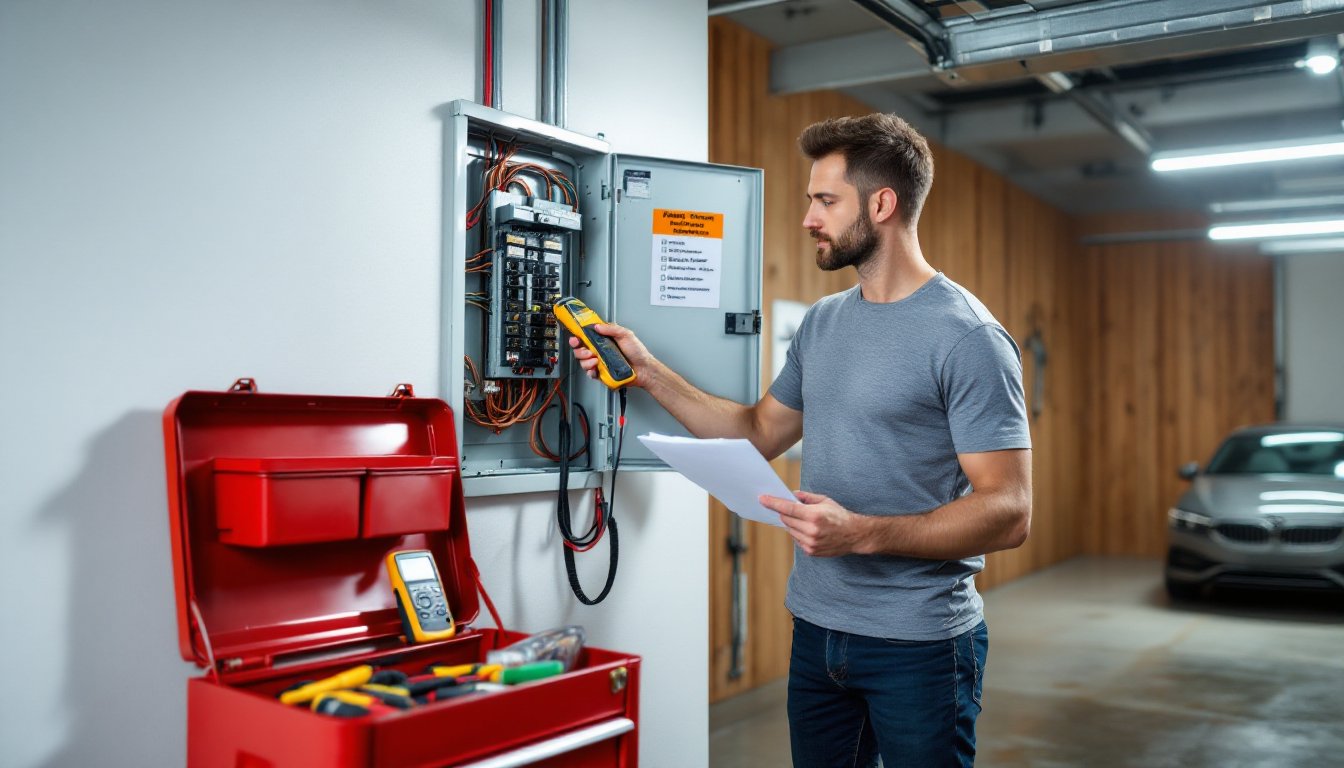
Test AFCIs at the breaker panel:
- Press the TEST button on the AFCI breaker. It should trip.
- Reset the breaker by flipping it fully off, then back on.
AFCI breakers that won’t trip or reset need replacement by a licensed electrician. Don’t bypass or disable these devices, they’re the last line of defense against electrical fires. Many electrical safety techniques emphasize regular testing as the cornerstone of home protection.
Professional Electrical Inspections: What to Expect
Some tasks require a licensed electrician. If the home is over 40 years old, was built before 1990, or uses aluminum wiring or a fuse box, schedule a pro inspection every 3–5 years.
What electricians check:
- Service panel condition: Corrosion, rust, burned breakers, improper wire sizing, and double-tapped breakers (two wires under one terminal, a code violation).
- Grounding and bonding: Proper earth ground connection and bonding between electrical, plumbing, and gas systems.
- Wire integrity: Infrared cameras reveal hot spots invisible to the eye. Overheated wiring often precedes failure.
- Load balance: Circuits should be evenly distributed across both legs of the panel. Imbalanced loads stress the service.
- Code compliance: GFCI/AFCI coverage, proper wire gauge for circuit amperage, junction box accessibility, and clearances.
- Aluminum wiring: Homes built 1965–1973 often have aluminum branch circuits, which expand and contract more than copper, loosening connections. Special connectors (AlumiConn or COPALUM) are required.
Electricians use thermal imaging, multimeters, and circuit analyzers to detect issues invisible during DIY checks. Expect to pay $200–$400 for a whole-house inspection, more for detailed testing or remediation.
Inspections often reveal undersized service panels (100-amp services struggle with modern loads) or outdated wiring that’s a ticking clock. Upgrading to a 200-amp panel costs $2,000–$4,000 but adds capacity, safety, and resale value. The approach mirrors building effective systems by addressing root causes, not symptoms.
Seasonal Electrical Maintenance Tasks
Seasonal shifts stress electrical systems. Temperature swings, moisture, and changing loads all demand attention.
Spring:
- Inspect outdoor outlets and lighting after winter freeze-thaw cycles. Water intrusion corrodes connections.
- Test landscape lighting transformers and GFCI protection before reactivating systems.
- Check sump pump operation and backup power if installed. Spring storms bring the highest usage.
- Clean dryer vents and check 240V dryer receptacles for tightness: lint and vibration loosen connections.
Summer:
- Verify air conditioner disconnect and circuit breaker are sized correctly. A 3-ton AC pulls 15–20 amps: undersized circuits trip or overheat.
- Inspect attic wiring if accessible. Heat accelerates insulation breakdown.
- Monitor for overloaded circuits from fans, window AC units, and dehumidifiers. Frequent tripping signals the need for a dedicated circuit.
Fall:
- Test heating system electrical connections, especially for electric furnaces and heat pumps.
- Inspect holiday lighting circuits before load hits. Consider a dedicated 20-amp circuit for large displays.
- Check generator connections and transfer switches if installed. Fall is the time to test before winter outages.
Winter:
- Inspect space heater circuits. Most heaters draw 1,500 watts (12.5 amps on a 120V circuit). Never daisy-chain heaters on extension cords.
- Check for ice dam heat cables and ensure they’re on GFCI-protected circuits.
- Monitor for condensation in outdoor junction boxes and service masts.
Homeowners in regions with extreme weather should adjust frequencies. Smart home technology now offers circuit monitoring that alerts to anomalies in real-time, adding another layer of protection.
Property owners managing multiple buildings or rental units often develop custom maintenance ideas that blend seasonal checks with occupancy turnover inspections. Proactive electrical care prevents tenant complaints and liability exposure.
Finally, document every inspection, repair, and upgrade. Timestamped records prove due diligence for insurance claims and increase buyer confidence during home sales. Electrical safety isn’t glamorous, but it’s non-negotiable. A few hours of annual maintenance beats the alternative every time.