Table of Contents
ToggleAn air conditioner that fails mid-July isn’t just uncomfortable, it’s a $300+ emergency service call during peak season. Most AC breakdowns happen because homeowners skip basic upkeep until something goes wrong. Regular preventive maintenance extends equipment life by 5–10 years, cuts energy bills by 15–30%, and catches small problems before they become expensive failures. This guide walks through the essential tasks that keep residential AC systems running efficiently, from quick monthly checks to annual professional tune-ups.
Key Takeaways
- Air conditioner preventive maintenance extends equipment life by 5–10 years, cuts energy bills by 15–30%, and prevents costly emergency repairs exceeding $1,200 for compressor replacement.
- Replace disposable filters every 30 days and pleated filters every 30–90 days depending on your environment, as clogged filters reduce airflow by 30–50% and can damage the compressor.
- Keep your outdoor condenser unit clear with minimum 12-inch side clearances and 24 inches above the fan, and clean coils twice per season to maintain 10–20% efficiency.
- Schedule annual professional AC tune-ups in spring ($75–$150) to check refrigerant charge, inspect electrical components, clean evaporator coils, and verify airflow before cooling season begins.
- Watch for warning signs like ice buildup on lines, warm air from vents, unusual noises, frequent breaker trips, or water leaks—these require immediate professional attention to prevent compressor damage.
Why Preventive Maintenance Matters for Your AC System
Central air conditioners are complex systems with multiple failure points: compressors, condensers, evaporator coils, refrigerant lines, and electrical components. Neglect any one element and the whole system suffers.
A dirty evaporator coil reduces heat transfer efficiency, forcing the compressor to work harder and draw more current. That increases wear on the motor windings and can trip breakers or blow capacitors. Refrigerant leaks, often from corroded fittings or damaged line sets, drop system pressure and cause the compressor to cycle erratically, shortening its lifespan.
Preventive maintenance addresses these issues before they cascade. Clean coils maintain design airflow (typically 400 CFM per ton of cooling capacity). Proper refrigerant charge ensures efficient heat exchange. Lubricated fan motors run quieter and last longer. Electrical connections that are checked and tightened annually don’t arc and fail.
The financial argument is straightforward: a tune-up costs $75–$150: replacing a compressor runs $1,200–$2,500. Manufacturers often require documented annual maintenance to honor warranty claims. Skip it, and that “lifetime” compressor warranty becomes void.
Beyond dollars, there’s comfort and safety. A well-maintained system cools evenly, dehumidifies properly, and doesn’t trip breakers during heat waves when the electrical grid is already stressed. Carbon monoxide isn’t a concern with electric AC, but gas furnaces sharing the same air handler need annual inspection to prevent dangerous flue gas leaks.
Essential Monthly and Seasonal Maintenance Tasks
Homeowners can handle most routine maintenance with basic tools and about 30 minutes per season. These tasks don’t require HVAC certification but do require consistency.
Filter Replacement and Cleaning Schedule
Disposable fiberglass filters (the cheap $1–$2 kind) need replacement every 30 days during cooling season. They’re rated MERV 1–4 and catch only large particles, enough to protect the blower motor but not much else.
Pleated filters (MERV 8–13) trap finer dust, pollen, and mold spores but restrict airflow if left too long. In homes with pets or high dust, change these every 30–60 days. In cleaner environments, 90 days works. A clogged filter cuts airflow by 30–50%, freezing the evaporator coil and potentially damaging the compressor.
Check the filter monthly by pulling it out and holding it to a light. If light doesn’t pass through easily, replace it. Note the airflow direction arrow on the filter frame, install it so air flows toward the blower motor.
Washable electrostatic filters can last 5–10 years but need monthly cleaning. Vacuum both sides first, then rinse with a garden hose from the clean side to push dirt out. Let them dry completely (24 hours) before reinstalling, a wet filter promotes mold growth inside the air handler.
Many systems now include seasonal maintenance checklist templates to track filter changes and other routine tasks throughout the year.
Outdoor Unit Care and Debris Removal
The condenser unit (the outdoor box with the fan) needs clear airflow on all sides. Minimum clearances per most manufacturers: 12 inches on sides, 24 inches above the fan discharge, and 60 inches above for service access.
Every month during cooling season:
-
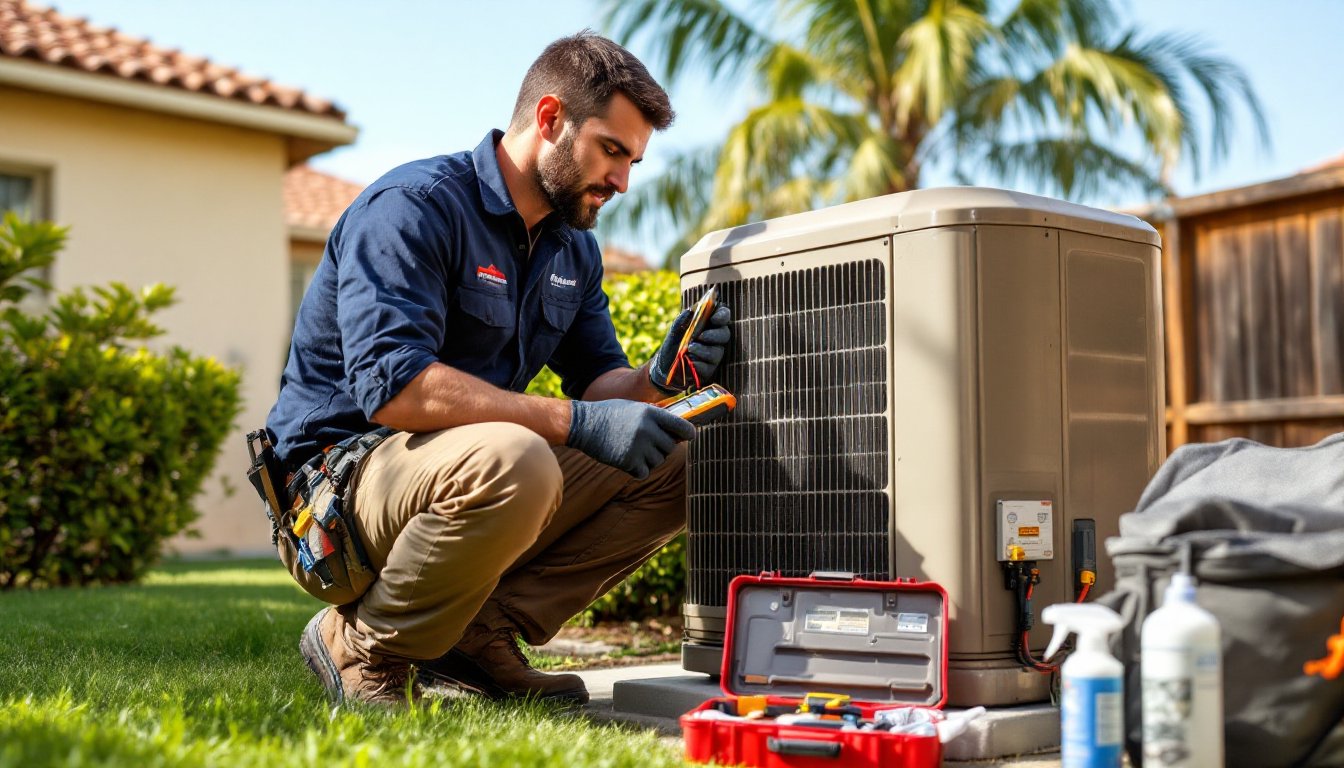
Remove debris from inside the unit. Turn off power at the disconnect box (usually mounted on the wall within 3 feet). Remove the top grille and lift out leaves, seed pods, grass clippings, and any critter nests.
-
Trim vegetation back to the 12-inch perimeter. Overgrown shrubs block airflow and reduce efficiency by 10–20%.
-
Straighten bent fins on the condenser coil using a fin comb (available at hardware stores for $5–$10). Bent fins restrict airflow. Work gently, the aluminum fins are thin and tear easily.
-
Hose down the coils from inside out, using low pressure. High-pressure washers can bend fins or drive dirt deeper into the coil. Do this twice per season: late spring and mid-summer.
-
Check the concrete pad for settling or tilting. Units should sit level. A tilted pad can strain refrigerant lines and cause oil migration issues in the compressor. If the pad has sunk more than 1 inch, it needs re-leveling, a job for a pro if refrigerant lines need disconnecting.
Safety note: Always wear safety glasses and work gloves when cleaning coils or handling sheet metal edges. The fins are sharp.
Homeowners looking for structured schedules can reference broader property upkeep guides that coordinate AC care with other seasonal tasks.
Professional Tune-Up Checklist: What to Expect
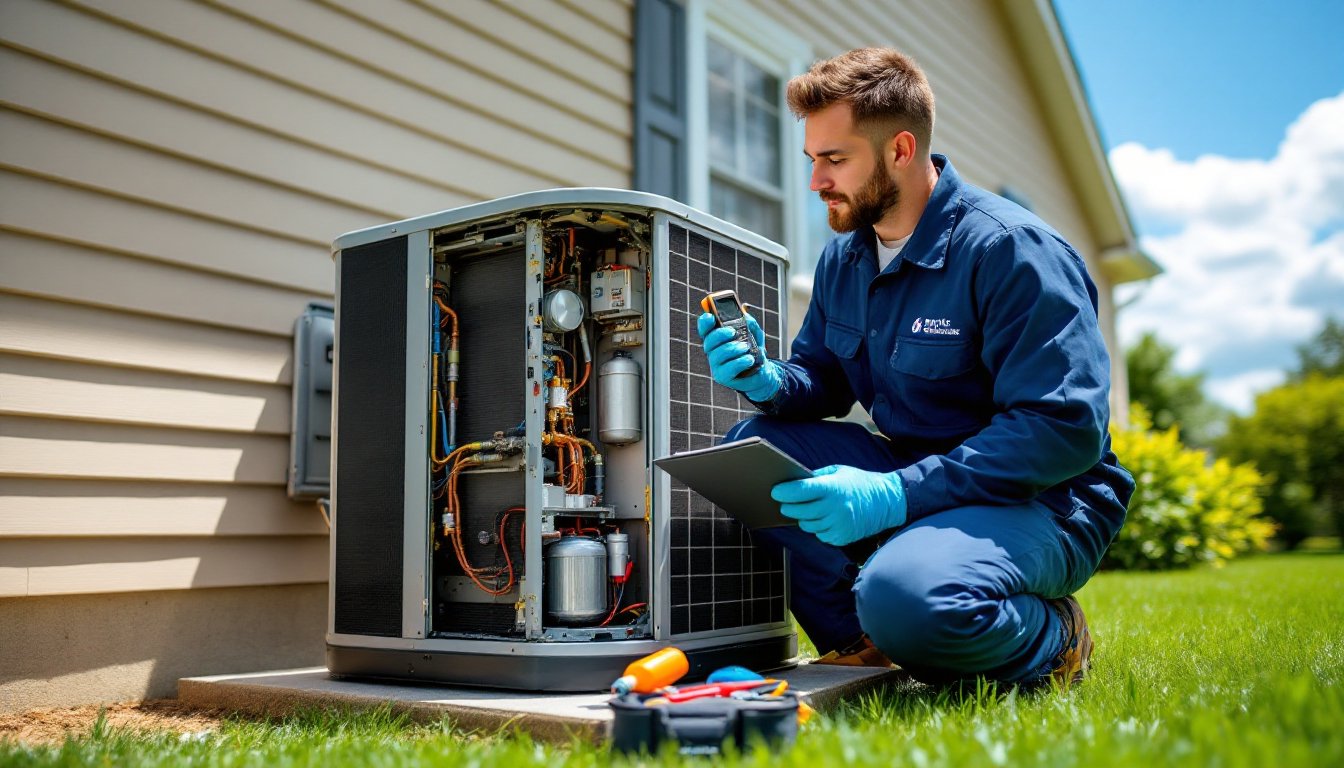
Annual professional service (scheduled in spring before cooling season) catches problems DIY maintenance misses. A qualified HVAC technician should perform these tasks:
Refrigerant Charge Check
Measure superheat and subcooling to verify proper refrigerant levels. Low charge (from leaks) reduces capacity and efficiency. Overcharge (from improper service) increases head pressure and can damage the compressor. Modern systems use R-410A refrigerant, which requires certified handling. If the technician “tops off” refrigerant without finding and repairing a leak, find a different company, refrigerant doesn’t evaporate.
Electrical Component Inspection
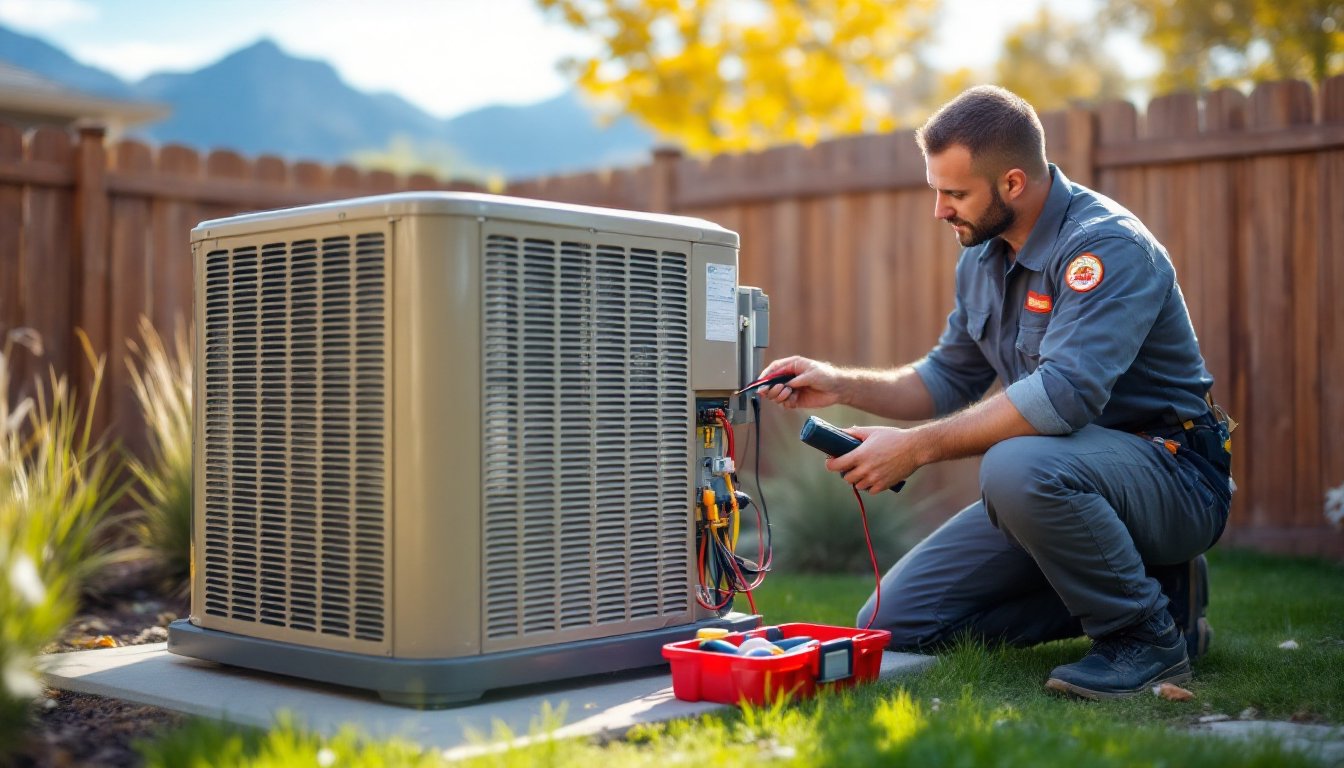
Test capacitors (start and run caps) with a multimeter. Capacitors fail gradually, causing hard starting, reduced efficiency, and eventual motor burnout. Replace any capacitor reading below 85% of rated microfarads.
Check contactor points for pitting or carbon buildup. Clean or replace as needed.
Tighten all wire connections at the contactor, capacitor, and compressor terminals. Loose connections cause arcing and heat damage.
Airflow Measurement
Verify airflow at 350–450 CFM per ton of cooling. Low airflow freezes the evaporator: high airflow reduces dehumidification. Technicians measure with an anemometer or calculate from temperature split and system capacity.
Evaporator Coil Cleaning
Inside the air handler, the evaporator coil collects dust that passes through or around the filter. Professionals use coil cleaners (foaming or no-rinse types) and compressed air to restore heat transfer. A dirty evaporator can reduce capacity by 20–30%.
Condensate Drain Check
Flush the drain line with a wet/dry vacuum and bleach solution or specialized tablets. Clogged drains cause water damage to ceilings and walls. Many modern systems include a float switch that shuts the unit down if the drain pan fills, test this switch annually.
Blower Motor Lubrication
Older belt-drive blowers need annual belt inspection (cracking, glazing, or stretching) and motor oiling. Newer direct-drive ECM motors are sealed and don’t require lubrication but should be checked for bearing noise.
Temperature Split Verification
Measure supply and return air temps. A proper split for most systems is 14–22°F in cooling mode. Lower splits indicate low airflow or refrigerant issues: higher splits suggest overcharge or excessive airflow.
A thorough tune-up takes 1.5–2 hours. If a tech claims to be “done” in 20 minutes, they’re skipping steps. Detailed information on what professionals check during HVAC tune-ups can help homeowners understand service value.
Cost note: Annual tune-ups typically run $75–$150. Service agreements (covering 2 visits per year: AC in spring, furnace in fall) cost $150–$300 and often include priority scheduling and discounts on repairs.
Warning Signs Your AC Needs Immediate Attention
Some problems shouldn’t wait for the next scheduled maintenance. Call a technician immediately if you notice:
Ice buildup on refrigerant lines or evaporator coil
Indicates restricted airflow (dirty filter, blocked return vents, failed blower) or low refrigerant. Running the system with ice damages the compressor. Shut it off and call for service.
Warm air from supply vents
Could be a tripped breaker, failed capacitor, refrigerant leak, or reversing valve issue (on heat pumps). Check the thermostat setting and breaker panel first, then call a pro if those aren’t the culprit.
Unusual noises
Grinding or squealing from the indoor unit suggests blower motor bearing failure.
Buzzing or humming outdoors (with the fan not spinning) points to a failed capacitor or seized compressor.
Hissing or bubbling near refrigerant lines indicates a leak.
None of these are DIY fixes.
Frequent breaker trips
Signals electrical problems: failing compressor, short circuit, or undersized breaker. Don’t just keep resetting, electrical faults cause fires.
Short cycling (unit runs less than 10 minutes per cycle)
Can result from oversized equipment, thermostat issues, refrigerant problems, or a failing compressor. Short cycling wastes energy and wears out components rapidly.
Water leaks indoors
Means a clogged condensate drain or cracked drain pan. Shut off the system to prevent water damage and clear the line with a wet/dry vac. If the pan is cracked, it’ll need professional replacement.
Burning smell
Turn off the system immediately. Could be overheated wiring, a seized motor, or dust on heat strips (in dual-fuel systems). Electrical fires develop quickly.
These warning signs often appear gradually. Keeping consistent seasonal maintenance records helps spot changes in performance before they become emergencies.
Safety reminder: Never attempt refrigerant repairs, electrical troubleshooting inside the control panel, or compressor replacement without proper licensing and tools. Refrigerant handling requires EPA 608 certification, and working on live electrical components poses shock and arc flash hazards.
Conclusion
Air conditioner maintenance isn’t glamorous, but it’s one of the highest-return investments a homeowner makes. An hour of seasonal upkeep and $100 for annual professional service protects a $3,000–$7,000 asset and prevents emergency breakdowns when you need cooling most. Stick to the monthly filter checks, keep the outdoor unit clear, and don’t skip the spring tune-up. Your AC will run more efficiently, last longer, and keep you comfortable through every heat wave.