Table of Contents
ToggleA well-maintained air conditioning system doesn’t just keep a home comfortable, it cuts energy bills by up to 15% and prevents expensive mid-summer breakdowns. Most homeowners ignore their AC until it stops working, usually on the hottest day of the year when HVAC technicians are booked solid for a week. Annual maintenance isn’t optional if a homeowner wants their system to reach its expected 15-20 year lifespan. It’s a straightforward process that combines professional service with a few tasks anyone can handle between visits.
Key Takeaways
- AC yearly maintenance cuts energy bills by up to 15% and extends your system’s lifespan to its expected 15-20 years.
- Schedule your AC yearly maintenance appointment in early spring (March or April) before peak cooling season to ensure technician availability and avoid high-demand pricing.
- Professional maintenance checks refrigerant levels, inspects electrical components, cleans coils, treats condensate drains, and calibrates thermostats—all essential tasks that prevent expensive mid-summer breakdowns.
- Homeowners can perform simple DIY maintenance between professional visits, including monthly filter replacements, outdoor unit debris removal, and coil rinsing, which cost minimal money but significantly boost efficiency.
- Skipping annual maintenance to save $100-$150 is false economy when a compressor replacement costs $1,500-$2,500 and full system replacement runs $3,500-$7,500.
- Most manufacturers require proof of annual professional maintenance to honor warranty claims, and insurance companies now request maintenance records for water damage evaluations.
Why Annual AC Maintenance Is Essential for Every Homeowner
Air conditioners are mechanical systems with moving parts, refrigerant under pressure, and electrical components that degrade over time. Without regular attention, efficiency drops by 5% each year. A system that once cooled a home comfortably at 3 tons of capacity might struggle to reach the same performance after three years of neglect, forcing it to run longer cycles and spike electricity costs.
Dirty coils and clogged filters restrict airflow, making the compressor work harder. This added strain shortens the compressor’s lifespan, and replacing a compressor often costs nearly as much as a new system. Routine maintenance catches refrigerant leaks before they become expensive problems, identifies failing capacitors before they strand a family in 95°F heat, and ensures the condensate drain stays clear to prevent water damage inside walls.
Most manufacturers require proof of annual professional maintenance to honor warranty claims. Skip the service, and a homeowner might find themselves paying out of pocket for a covered repair. Insurance companies are also starting to ask for maintenance records when evaluating claims for water damage caused by AC-related leaks.
Beyond dollars and warranties, there’s indoor air quality. A neglected system circulates dust, mold spores, and allergens. The evaporator coil, constantly damp during operation, becomes a breeding ground for mildew if it’s not cleaned. Regular service includes treating that coil and checking the drain pan for standing water that could harbor growth.
When to Schedule Your AC Maintenance Appointment
The best time to schedule AC maintenance is early spring, ideally in March or April, before cooling season begins in earnest. Technicians have more availability, and any parts that need ordering arrive before the system is running daily. Waiting until June means competing with emergency repair calls, and a homeowner might wait days for an appointment while their house heats up.
Some regions with year-round cooling needs benefit from twice-yearly service, once in spring and again in fall. Homeowners using structured schedules report fewer unexpected repairs and better system performance. In climates where the AC runs eight months a year, that second check-up isn’t overkill: it’s smart insurance.
Homeowners should also schedule maintenance if they’ve just moved into a house and don’t know the system’s service history. A professional can assess whether the previous owner kept up with care or if the unit has been limping along. Even a brand-new system benefits from a check-up after the first season, installation issues like improper refrigerant charge or airflow problems show up during that initial year of operation.
Avoid scheduling during peak heat. July and August are when HVAC companies are slammed with repair calls. A maintenance visit might get bumped or rushed, and pricing often increases during high-demand periods.
What Professional AC Maintenance Includes
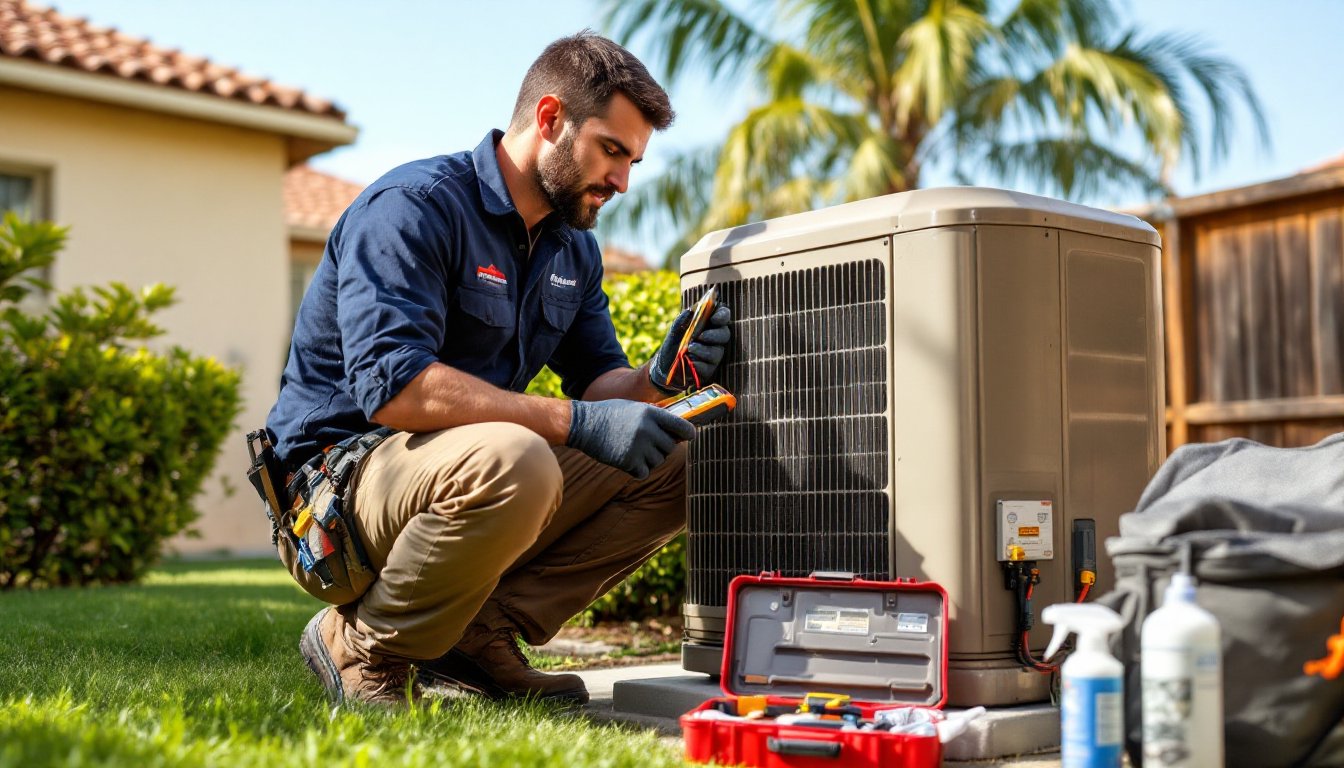
A thorough professional maintenance visit takes 60 to 90 minutes and covers both the indoor air handler and outdoor condenser unit. Here’s what a competent technician should check and perform:
Refrigerant Level and Leak Check
The technician measures refrigerant pressure with gauges to confirm it matches manufacturer specs. Low refrigerant means a leak somewhere in the system, AC units don’t “use up” refrigerant like a car uses gas. If the level is low, the tech should locate and repair the leak, not just top it off. Adding refrigerant without fixing the leak is a temporary band-aid that costs the homeowner twice.
Electrical Components Inspection
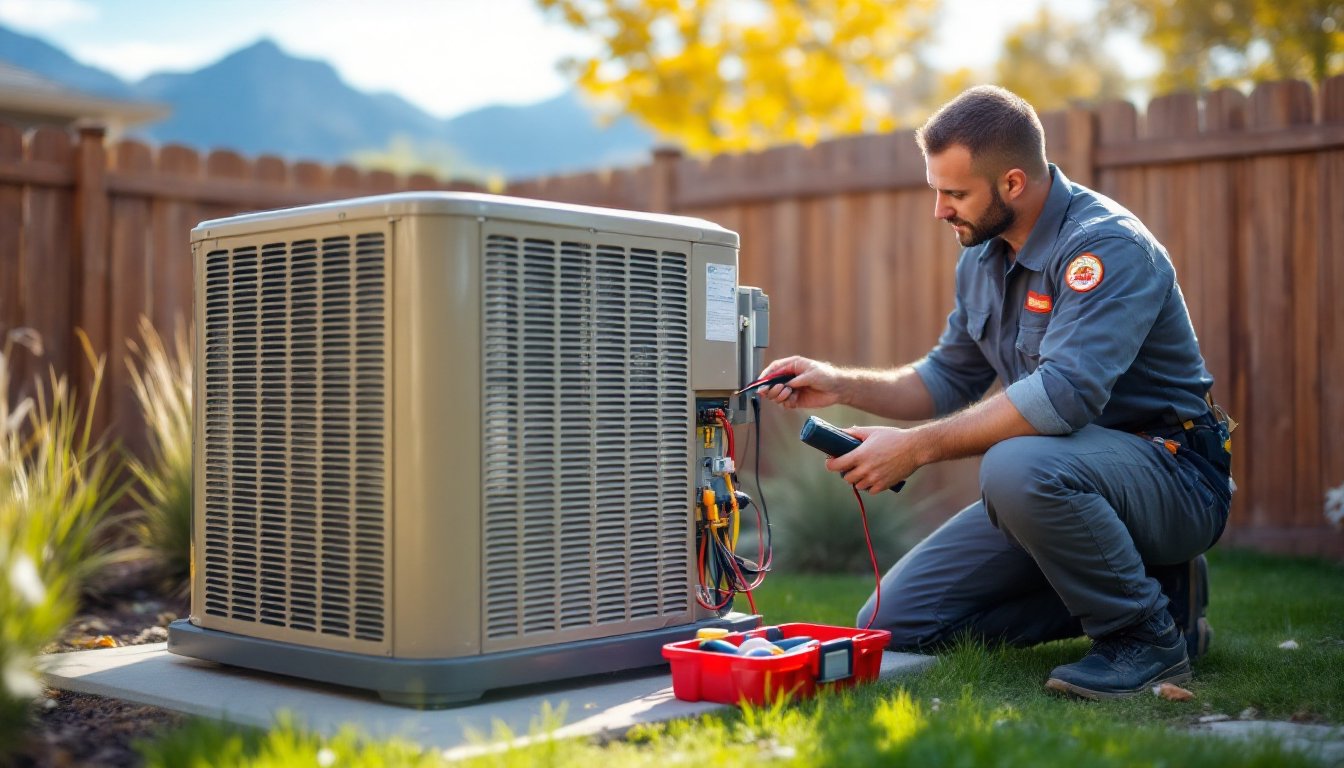
Capacitors, contactors, and wiring connections all get inspected. Capacitors are among the most common failure points, they store electrical energy to start the compressor and fan motors. A weak capacitor causes hard starting and motor strain. Technicians measure capacitance with a multimeter and replace any that test below spec. Loose wire connections create resistance, generating heat that can lead to failure or fire hazards.
Coil Cleaning and Airflow Check
Both the evaporator coil (inside) and condenser coil (outside) need cleaning. The evaporator coil collects dust and biological growth: the condenser coil picks up pollen, grass clippings, and cottonwood fluff. Dirty coils reduce heat transfer, forcing the system to run longer. Professionals use coil cleaner and a soft brush or low-pressure water, never a pressure washer that can bend the delicate aluminum fins.
Airflow gets measured at the supply registers. The system should deliver the airflow rate specified on the equipment nameplate, typically 350-450 cubic feet per minute per ton of cooling. Low airflow indicates a restrictive filter, duct leaks, or a blower issue.
Condensate Drain Treatment
The condensate drain line carries moisture away from the evaporator coil. Over time, algae and slime build up inside the drain, causing clogs that back water into the home. Technicians flush the line with a shop vac or specialized pump, then treat it with tablets or solution that inhibit biological growth. They also check that the drain pan isn’t rusted through and that the safety float switch (if installed) functions properly to shut down the system if the pan overflows.
Thermostat Calibration
The technician verifies the thermostat reads temperature accurately and cycles the system on and off at the correct setpoints. Smart thermostats sometimes need software updates or recalibration after a year of use.
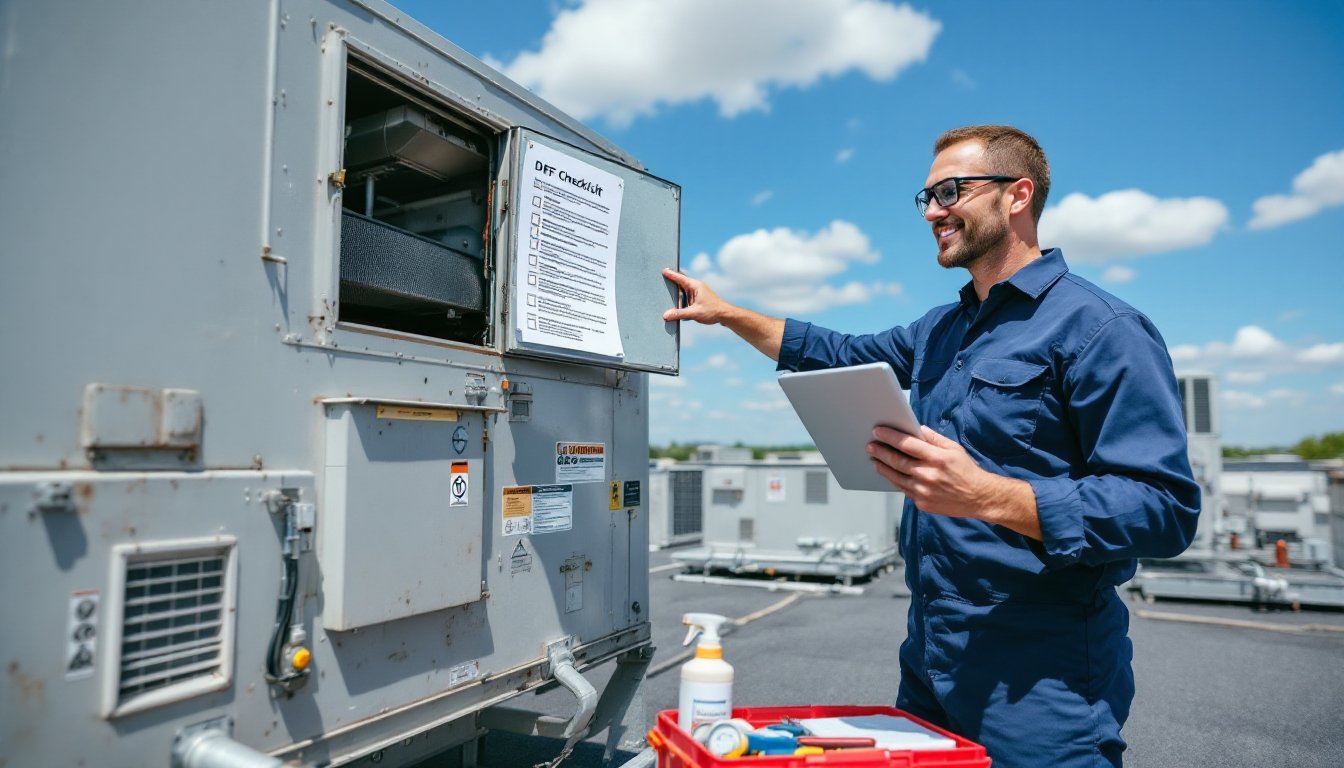
Professionals using proven maintenance protocols and checklists complete these tasks systematically, ensuring nothing gets missed. A written report at the end of the visit should document findings, measurements, and any recommended repairs.
DIY AC Maintenance Tasks You Can Do Yourself
Homeowners can handle several maintenance tasks between professional visits. These don’t require specialized tools or HVAC certification, just a bit of time and attention to detail.
Filter Replacement and Cleaning
Disposable filters should be replaced every 1-3 months depending on usage, pets, and indoor air quality. Standard fiberglass filters (MERV 1-4) need monthly replacement. Pleated filters (MERV 8-11) last up to three months. High-efficiency filters (MERV 13+) can restrict airflow if the system wasn’t designed for them, check the air handler’s specs before upgrading filter type.
Filter size is printed on the frame edge: common sizes like 16x20x1, 20x25x1, or 16x25x1 refer to width, height, and thickness in inches. Always note the airflow direction arrow on the filter frame and install with the arrow pointing toward the blower.
Washable filters need cleaning every 30 days during cooling season. Remove the filter, rinse it with a garden hose from the clean side to push dirt out the way it came in, then let it air dry completely before reinstalling. Never run the system with a damp filter, moisture promotes mold growth inside the ductwork.
Home maintenance routines that include practical filter and checklist ideas keep systems running smoothly year-round and prevent simple oversights from becoming expensive problems.
Outdoor Unit Care and Debris Removal
The condenser unit outside needs clearance to breathe. Keep 2 feet of clearance around all sides of the unit, and trim back bushes, grass, or vines that encroach. Don’t plant shrubs closer than 2 feet, even if they’re small now, they’ll grow.
Debris accumulates on the condenser coil fins. Turn off power to the unit at the disconnect box (usually mounted on the wall near the condenser), then use a garden hose with a spray nozzle to rinse the coil from the inside out. Spray gently, high pressure bends the thin aluminum fins and reduces airflow. Remove any leaves, seed pods, or cottonwood buildup from the top of the unit.
Inspect the concrete pad under the unit. It should be level. If the pad has settled or tilted, the refrigerant might not drain properly back to the compressor, causing mechanical stress. Leveling a pad is a straightforward job: lift one side with a pry bar, add crushed stone or sand underneath, then compact it.
Safety Warning: Always shut off power at both the outdoor disconnect and the breaker panel before touching anything on the condenser unit. Capacitors inside store lethal voltage even when the unit is off.
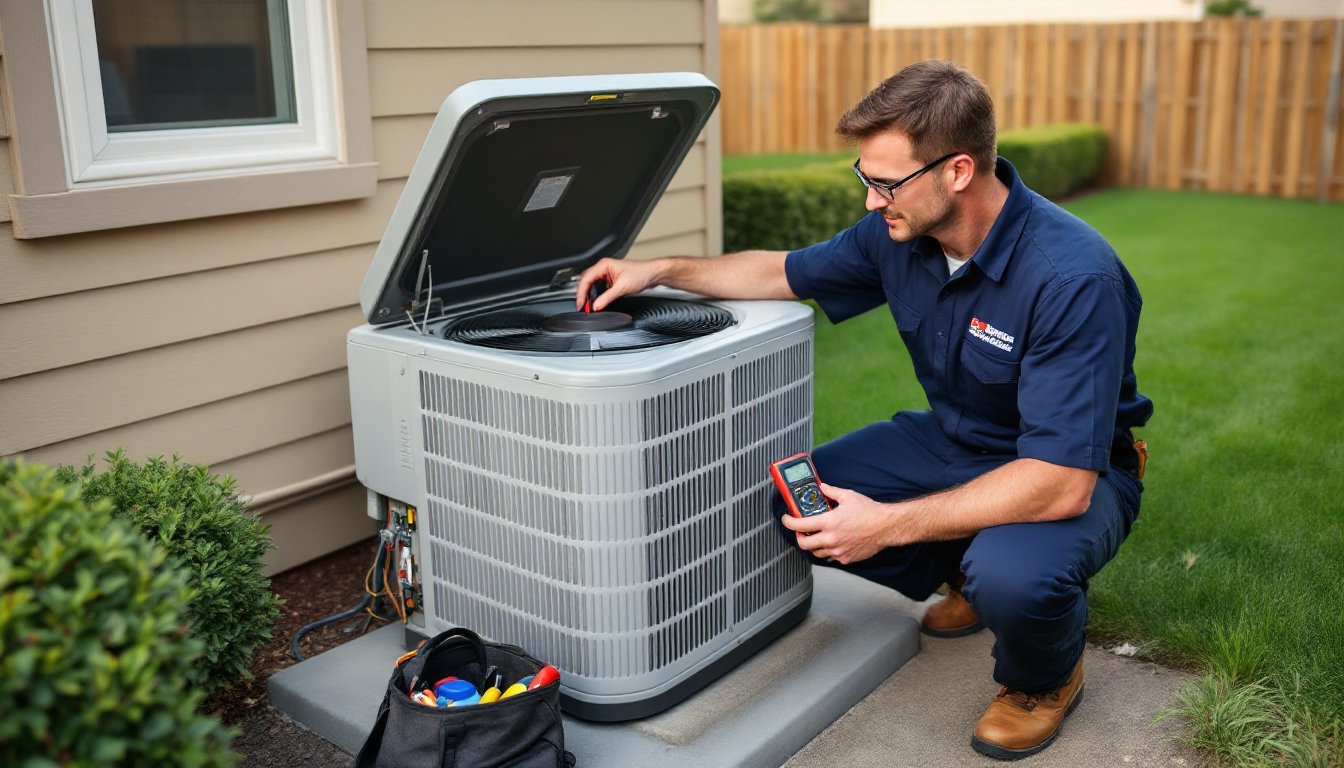
Check the condenser fan blade for cracks or chips. A damaged blade creates vibration and noise. Replacements are inexpensive and install with a single setscrew on the motor shaft, but this task requires working inside the unit with power off and the top grille removed.
Keep the area around the outdoor unit clear of lawn clippings after mowing. Mulching mowers send a cloud of fine grass particles into the air that get sucked into the condenser coil. Blow off or hose down the unit after yard work.
How Much Does Annual AC Maintenance Cost?
Expect to pay $80 to $150 for a standard annual AC tune-up from a reputable HVAC company. Pricing varies by region, system complexity, and whether the homeowner has a service agreement. Metropolitan areas and high cost-of-living regions trend toward the higher end of that range. Systems with unusual configurations, zone controls, or multiple air handlers may cost more due to the additional time required.
Many HVAC companies offer annual service plans for $150-$300 per year that include one or two maintenance visits plus perks like priority scheduling, discounts on repairs (typically 10-15% off parts and labor), and no after-hours or weekend trip charges. These plans make sense for homeowners who want predictable costs and faster service during emergencies. Finding qualified contractors through resources like Angi’s verified provider network helps homeowners compare local options and read verified reviews before committing.
Some items discovered during maintenance aren’t included in the base service fee. If the technician finds a failing capacitor ($150-$300 installed), a refrigerant leak requiring repair and recharge ($300-$1,500), or damaged ductwork, those are separate charges. Reputable companies provide a written estimate before performing additional work.
DIY maintenance costs almost nothing, replacement filters run $5-$25 depending on type, and a bottle of coil cleaner is $10-$15. A homeowner who changes filters monthly and keeps the outdoor unit clear between professional visits maximizes the value of that annual service call.
Skipping annual maintenance to save $100-$150 is false economy. The average AC compressor replacement costs $1,500-$2,500, and a full system replacement runs $3,500-$7,500 depending on size and efficiency rating. According to testing by Good Housekeeping’s appliance lab, well-maintained systems use 15-20% less energy than neglected units, translating to $150-$300 in annual electricity savings in warm climates. The maintenance visit pays for itself in reduced operating costs within a single cooling season, not counting the extended equipment lifespan and avoided repair bills.
Homeowners on tight budgets should prioritize professional service in spring, then handle the DIY tasks monthly throughout the season. Even on a limited budget, this combination provides most of the reliability and efficiency benefits of a premium maintenance program.