Table of Contents
ToggleDenver’s climate isn’t what most people expect. Sure, winters get cold, but summers regularly hit the mid-90s, and at 5,280 feet, the sun feels more intense. An air conditioner working overtime in thin air and intense UV exposure needs regular attention. Skipping maintenance doesn’t just mean higher bills: it means a system that fails on the hottest day of July when every HVAC tech in the metro area is booked solid. This guide walks through what Denver homeowners need to know about keeping their AC running efficiently, what they can handle themselves, and when it’s time to call a pro.
Key Takeaways
- Denver’s high elevation, intense UV exposure, and arid climate cause AC systems to work harder and degrade faster than in other regions, reducing lifespan from 15 years to just 8-10 years without proper maintenance.
- Change AC filters every 30-60 days during cooling season and clean the outdoor condenser unit regularly to prevent the 20-30% efficiency loss caused by dust and cottonwood debris buildup common in Denver.
- Schedule professional AC maintenance in April or May before summer demand peaks, with costs typically running $80-150 per visit or $150-250 annually for combined spring and fall tune-ups.
- Common Denver AC problems like frozen evaporator coils, short cycling, and refrigerant leaks can be prevented through monthly filter changes, annual professional service, and prompt attention to any signs of reduced cooling or unusual sounds.
- Handle basic Denver AC maintenance yourself—filter replacement, outdoor unit cleaning, and drain line flushing—but leave refrigerant work, capacitor replacement, and evaporator coil cleaning to EPA-certified professionals.
Why AC Maintenance Matters More in Denver’s Unique Climate
Denver’s elevation and semi-arid climate create specific challenges for air conditioning systems. The lower atmospheric pressure at altitude means air is less dense, which affects how efficiently AC compressors and fans operate. Units work harder to move the same volume of air compared to sea-level systems.
The region’s dramatic temperature swings, 40-degree differences between day and night aren’t unusual, force AC systems through more frequent cycling. Each startup puts wear on compressor contacts, fan motors, and capacitors. More cycles mean more opportunities for failure.
Dry air and frequent wind kick up dust, cottonwood seeds, and pine pollen. These debris types clog condenser coils faster than in humid climates where particulates clump and fall. A partially blocked coil reduces heat exchange efficiency by 20-30%, forcing the compressor to run longer and hotter.
Intense UV exposure at altitude degrades plastic housings, electrical insulation, and refrigerant line jackets faster than at lower elevations. Brittle wiring insulation can crack and short out. Regular inspections catch these issues before they become expensive failures.
Neglected systems don’t just cost more to run, they fail earlier. The average lifespan of a well-maintained AC unit in Denver is 12-15 years. Skip annual service, and that drops to 8-10 years. Considering replacement costs run $4,000-$7,000 for a typical residential system, maintenance is cheap insurance.
Essential AC Maintenance Tasks Denver Homeowners Can Do Themselves
Not every maintenance task requires a service call. Homeowners comfortable with basic tools can handle several critical jobs that keep systems running smoothly between professional tune-ups.
Filter Changes and Cleaning
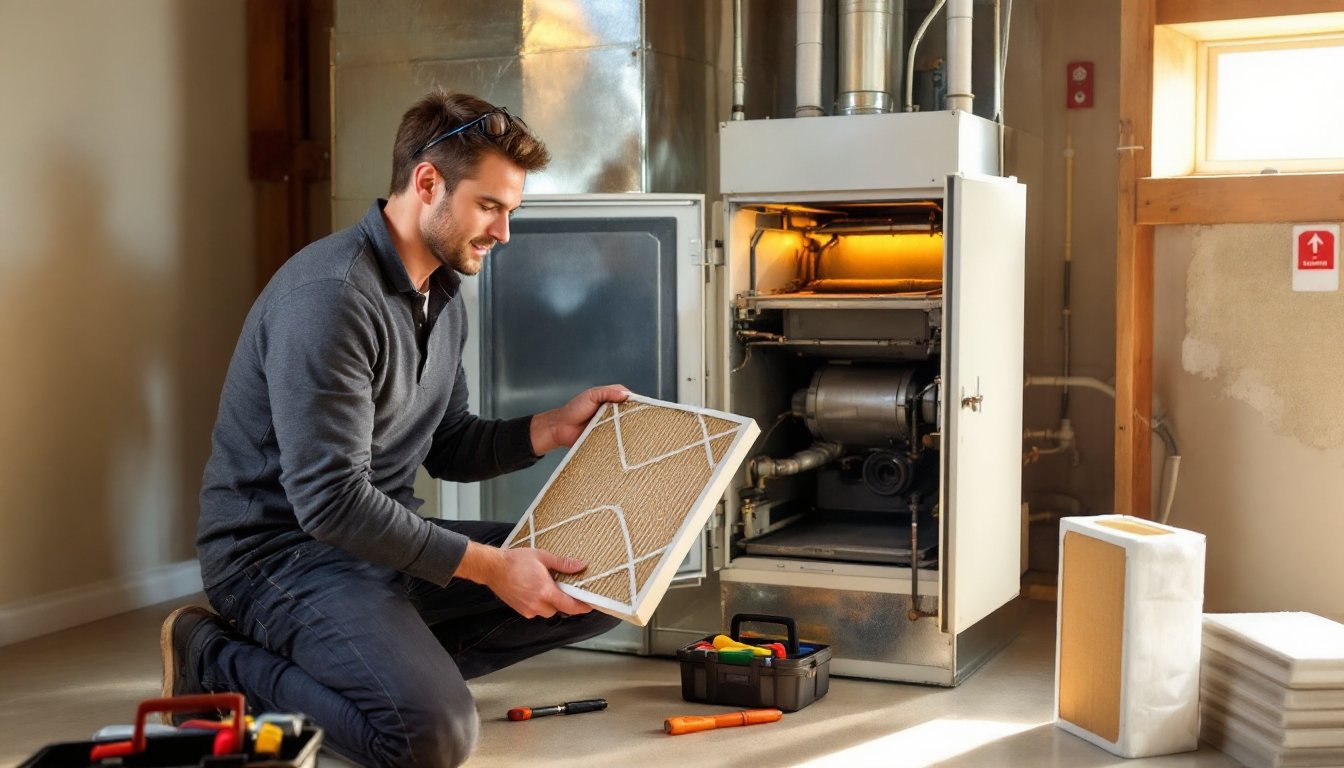
Standard disposable filters need replacement every 30-60 days during cooling season in Denver. The dust load here means filters clog faster than the manufacturer’s 90-day rating suggests. A clogged filter restricts airflow, which reduces cooling capacity and can freeze the evaporator coil.
Locate the filter slot, usually at the return air grille or in the air handler cabinet. Note the arrow indicating airflow direction before removing the old filter. Measure the filter slot (common sizes are 16x25x1 inch or 20x20x1 inch) and match it exactly. Undersized filters let debris bypass into the blower assembly.
For homes with washable electrostatic filters, rinse monthly with a garden hose from the clean side, forcing debris out the way it entered. Let the filter dry completely, 24 hours minimum, before reinstalling. A damp filter becomes a mold factory.
Upgrade to MERV 8-11 pleated filters for better dust capture without restricting airflow. MERV 13+ filters trap more particles but may strain older blower motors not designed for the increased resistance. Check your system’s specifications before upgrading.
Outdoor Unit Care and Debris Removal
The condenser unit outside does the heavy lifting of heat rejection. Keep the area clear and the coils clean for peak efficiency.
Shut off power at the disconnect box mounted near the unit before any cleaning. It’s usually a gray metal box with a pull-out fuse block or flip lever. Never work on the unit while it’s energized.
Remove leaves, cottonwood fluff, grass clippings, and pine needles from around the unit. Maintain 24 inches of clearance on all sides for proper airflow. Trim back shrubs, ornamental grasses, and tree branches that have grown too close.
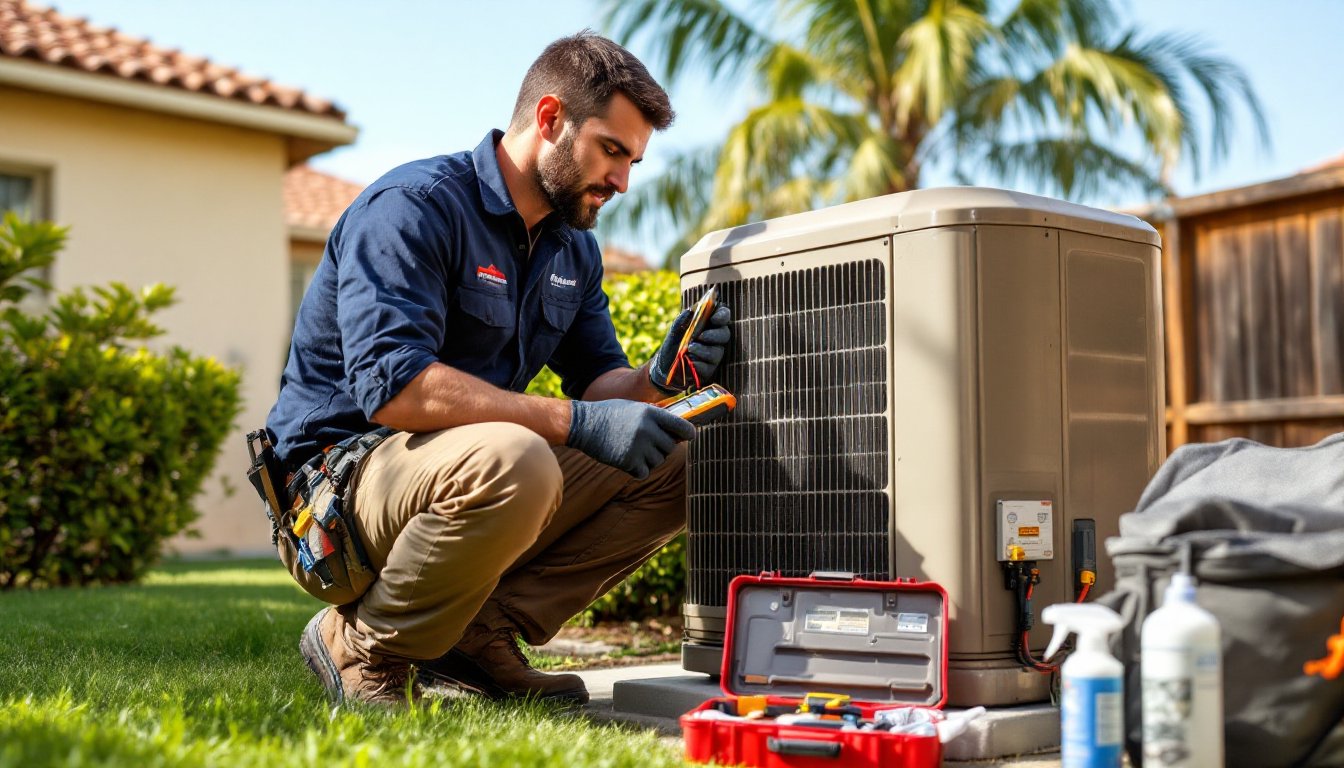
Inspect the condenser fins, the thin aluminum strips covering the coil. Bent fins block airflow and reduce efficiency. Straighten them carefully with a fin comb (available at hardware stores for $8-15) or a butter knife, working gently to avoid tearing the fragile metal.
Spray the coil from inside out with a garden hose set to a gentle spray, not a pressure washer, which can bend fins or force debris deeper into the coil. For stubborn buildup, use a coil cleaner designed for outdoor units. Follow product directions carefully: some formulas require rinsing, others are self-rinsing.
Check the concrete pad for settling. If the unit tilts more than a few degrees, it stresses refrigerant lines and can cause oil migration in the compressor. Releveling requires lifting the unit with a pry bar and shimming with composite shims, consider this a job for a professional if you’re not confident working with heavy equipment.
Clear the condensate drain line running from the indoor air handler. Algae growth in Denver’s dry climate is less common than in humid regions, but dust can still clog the line. Pour a cup of distilled white vinegar down the drain opening every few months to prevent buildup.
When to Schedule Professional AC Maintenance in Denver
Spring is prime time for AC tune-ups in Denver, ideally April or early May before the summer rush. Techs have more availability, and any parts needed can be ordered without the pressure of a heat wave.
A proper professional maintenance visit includes tasks homeowners can’t safely or legally perform. Techs check refrigerant charge using manifold gauges and add refrigerant if needed. Low refrigerant indicates a leak, which must be found and repaired, it’s illegal under EPA regulations to simply top off a leaking system.
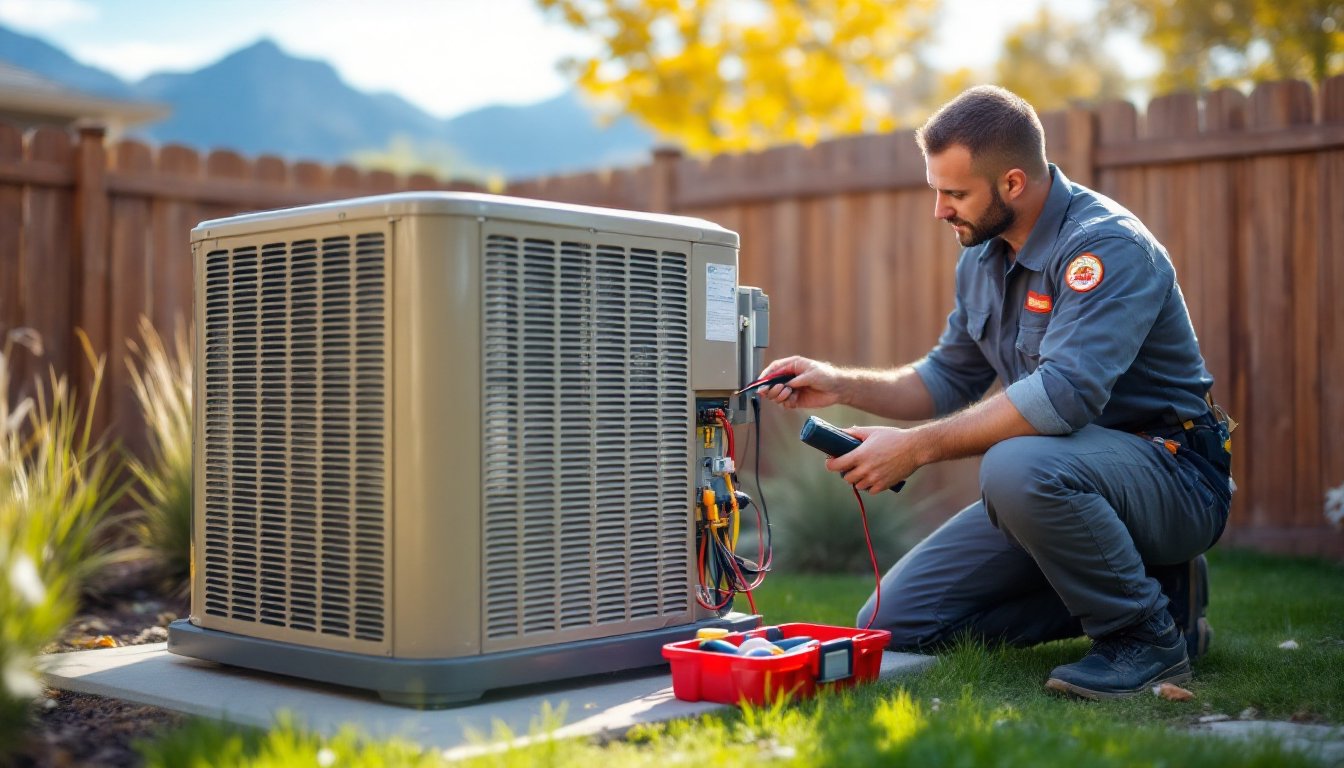
Professionals measure electrical draw on the compressor, blower motor, and fan motor using a clamp meter. Amperage outside the nameplate range signals failing components. They inspect and tighten electrical connections, which can loosen from vibration and thermal cycling.
Capacitors, cylindrical components that give motors the starting boost they need, wear out over time. A tech tests capacitance with a multimeter and replaces weak capacitors before they fail. A failed capacitor means a motor that won’t start, which means no cooling until it’s replaced. Investing in home improvement cost estimators can help budget for these eventual repairs.
Evaporator coils inside the air handler require removal of access panels and careful cleaning to avoid bending fins or damaging the delicate coil. This job requires experience and the right tools, it’s not a DIY task for most homeowners.
Techs verify correct airflow across the evaporator, measured in cubic feet per minute (CFM). Residential systems typically require 400 CFM per ton of cooling capacity. A 3-ton system should move 1,200 CFM. Low airflow from duct restrictions, a dirty blower wheel, or incorrect fan speed settings reduces efficiency and can freeze the coil.
They inspect the condensate pump if your system uses one. Pumps that fail dump water inside the home, potentially damaging ceilings, walls, and flooring. Techs test the float switch and verify the pump moves water reliably.
Expect to pay $80-150 for a standard maintenance visit in the Denver metro area. Some companies offer annual plans that include spring and fall tune-ups (for both AC and furnace) at a discount, typically $150-250 per year. Given that ignoring maintenance can shorten system life and understanding typical HVAC repair costs in the area, annual service pays for itself.
Common AC Problems Denver Homeowners Face (And How to Prevent Them)
Frozen evaporator coils top the list of service calls in Denver. Symptoms include reduced cooling, ice buildup on refrigerant lines, and water dripping from the air handler. Causes include restricted airflow from dirty filters, low refrigerant from leaks, or a blower motor running too slowly. Prevention: change filters monthly during cooling season and schedule annual professional maintenance.
Short cycling, when the compressor runs for only a few minutes before shutting off, wastes energy and stresses components. Common causes are an oversized unit (installed by a contractor who didn’t perform a proper load calculation), a failing thermostat, or a dirty condenser coil. If the system is correctly sized, cleaning the outdoor unit and checking thermostat placement (it should be on an interior wall away from heat sources and drafts) often solves the problem.
Refrigerant leaks develop from vibration, UV degradation of line sets, or corrosion from road salt tracked near outdoor units. R-410A refrigerant used in modern systems operates at higher pressures than older R-22, so even small leaks cause performance drops. You’ll notice reduced cooling, ice on lines, or hissing sounds. Refrigerant work requires EPA certification, this isn’t DIY territory. A tech must find the leak, repair it, evacuate the system, and recharge with the correct refrigerant amount by weight.
Compressor failure is the most expensive repair, often costing as much as replacement. Causes include running with low refrigerant (oil circulation depends on refrigerant), electrical issues, or contaminants in the system. Prevent compressor failure by addressing refrigerant leaks promptly, keeping coils clean, and replacing capacitors before they fail completely.
Condensate drainage problems are less common in Denver’s dry climate than humid regions, but dust and debris can still clog drain lines. If the drain backs up, the overflow switch shuts down the system to prevent water damage. Pour vinegar down the drain line quarterly and ensure the outdoor drain outlet isn’t blocked by landscaping or settling soil.
Thermostat malfunctions cause erratic operation. Old mechanical thermostats lose calibration: digital models can fail from power surges or dead batteries. If upgrading to a programmable or smart thermostat, verify compatibility with your system, some require a C-wire (common wire) for power, which older systems may not have. Modern smart home technology options offer remote monitoring and diagnostics that can catch problems early.
Conclusion
Denver’s altitude, intense sun, and dust create conditions that accelerate AC wear. Regular filter changes, outdoor unit cleaning, and annual professional maintenance aren’t optional, they’re what separates a system that lasts 15 years from one that dies at 8. Most homeowners can handle basic tasks with minimal tools and an hour of time. For everything else, a qualified tech catches small problems before they become expensive failures. The front range summer heat isn’t getting any milder, keep your system maintained and stay comfortable.