
Table of Contents
ToggleCedar roof shingles offer natural beauty and impressive durability, but only if homeowners stay ahead of maintenance. Left unchecked, moss, algae, and UV exposure degrade even premium cedar within a few years. Unlike asphalt or metal roofing, cedar is a living material that requires periodic cleaning, inspection, and treatment to reach its 30+ year lifespan. This guide walks through the essential maintenance tasks, seasonal schedules, and treatment options that keep cedar shingles weathertight and attractive. Whether a homeowner inherited a cedar roof or chose it for curb appeal, understanding these practices prevents costly repairs and premature replacement.
Key Takeaways
- Cedar roof shingles can last 30-40 years with proper maintenance, compared to only 15-20 years when neglected, making regular upkeep a cost-effective investment against premature reroofing.
- Clean cedar roofs with oxygen bleach solutions and soft brushes rather than high-pressure washers to preserve wood fibers and prevent shingle damage.
- Install zinc or copper strips along the ridge and apply annual preventive moss treatments in spring or fall to combat moss and algae growth, which accelerate wood deterioration.
- Inspect cedar roof shingles twice yearly for split shingles, cupping, missing pieces, and soft spots, and address issues promptly to prevent moisture infiltration and rot.
- Apply water repellents or wood preservatives every 3-5 years to restore protective oils lost to UV exposure, and avoid film-forming sealers that trap moisture and cause accelerated rot.
- Follow a seasonal maintenance schedule—clearing debris in spring, trimming branches in summer, conducting deep inspections in fall, and monitoring snow loads in winter—to prevent small issues from becoming expensive problems.
Why Cedar Roof Shingles Require Regular Maintenance
Cedar shingles are naturally rot-resistant thanks to oils like thujaplicin, but those oils degrade over time. Without maintenance, the wood becomes porous, allowing moisture infiltration that leads to splitting, cupping, and decay.
Unlike synthetic roofing, cedar is organic and responds to environmental stress. UV radiation breaks down lignin (the wood’s natural binder), turning shingles gray and brittle. Moisture cycles, wet winters, dry summers, cause expansion and contraction that warp shingles if they’ve lost protective oils.
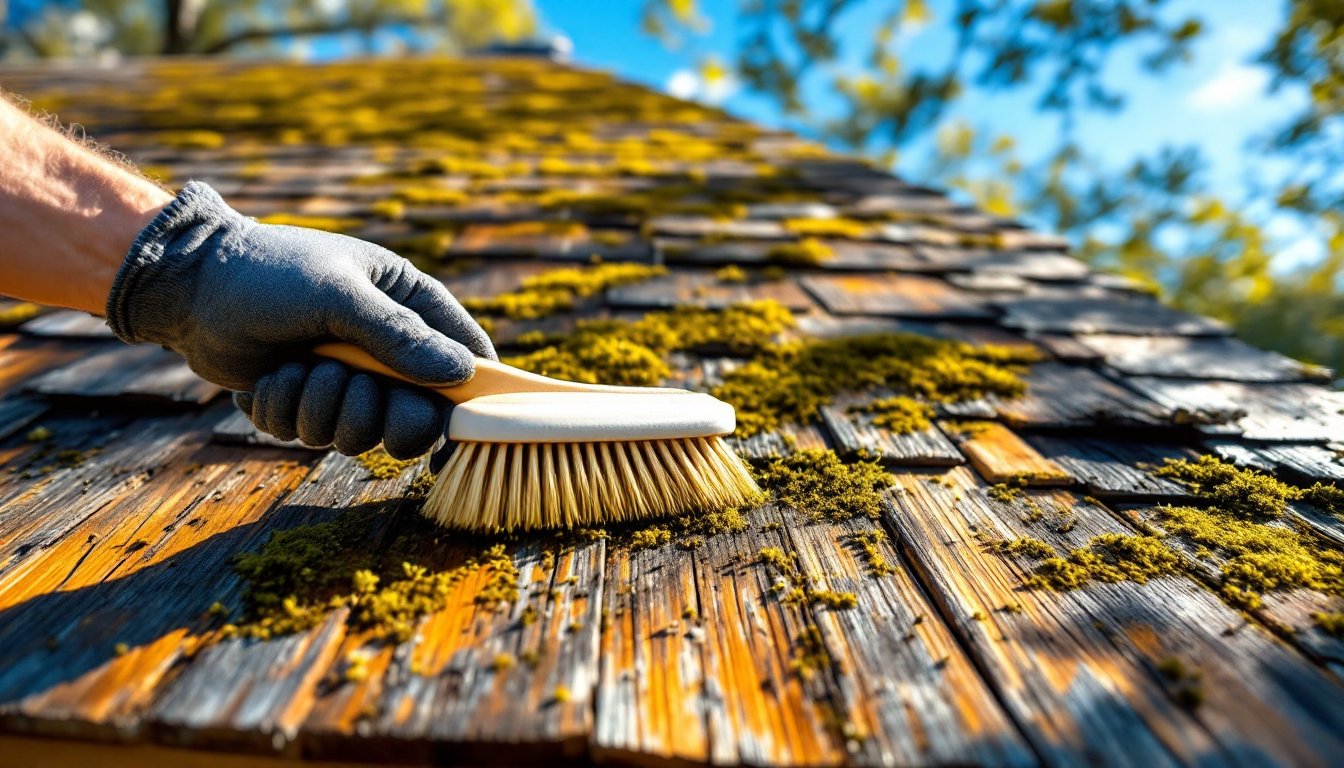
Moss and algae growth accelerates deterioration. Moss roots burrow into the wood grain, holding moisture against the surface and preventing proper drying. Algae creates black streaks and retains water, which freezes in cold climates and cracks the shingles from within.
Regular maintenance, cleaning, inspection, and treatment, extends a cedar roof’s life from 15-20 years (neglected) to 30-40 years (maintained). The investment in annual upkeep is far less than premature reroofing, which can run $15,000–$30,000 depending on roof size and regional labor costs. Homeowners in humid or shaded areas face faster degradation and need more frequent attention than those in dry, sunny climates.
Essential Cleaning and Debris Removal Techniques
Start by clearing the roof surface and gutters. Use a leaf blower or soft-bristle broom to remove loose debris, branches, leaves, pine needles, that trap moisture. Never use a pressure washer above 800 PSI: high pressure shreds the wood fibers and shortens shingle life. A garden hose with a spray nozzle is safer for rinsing.
For general cleaning, mix a solution of 1 part oxygen bleach (sodium percarbonate) to 3 parts water in a pump sprayer. Avoid chlorine bleach, which kills beneficial wood fibers and harms surrounding vegetation. Apply the solution on a cool, overcast day to prevent rapid evaporation. Let it sit for 15–20 minutes, then rinse from the ridge down to avoid driving water under shingles.
Clean gutters and downspouts simultaneously. Clogged gutters overflow onto the roof edge, keeping the lower shingles perpetually damp. Install gutter guards or schedule biannual gutter cleaning to prevent this issue.
Trim overhanging branches to improve sunlight and airflow. Shaded roofs stay damp longer, creating ideal conditions for moss and algae. Aim for at least 3–4 feet of clearance between branches and the roof surface.
Safety first: Work from a ladder or roof jacks with proper fall protection. Wet cedar is slippery. Wear rubber-soled boots, gloves, and safety goggles when handling cleaning solutions.
Best Practices for Moss and Algae Prevention
Moss thrives in shade and moisture. Install zinc or copper strips along the ridge: rainwater washes trace metal ions down the roof, creating a hostile environment for moss. A 2-inch-wide strip provides protection for roughly 10–15 feet downslope.
Apply a preventive moss treatment annually in late spring or early fall. Products containing zinc sulfate or copper sulfate work well, but follow label rates carefully, over-application damages plants below. Spray on a dry day with no rain in the forecast for 48 hours.
For existing moss, use a plastic putty knife or stiff brush to gently scrape it off. Don’t use metal tools, which gouge the wood. Follow with the oxygen bleach solution described above.
Improve drainage by ensuring gutters slope properly (¼ inch per 10 feet toward downspouts). Standing water on the roof or in gutters promotes algae growth. If certain roof sections stay persistently damp, consider adding ridge vents or improving attic ventilation to reduce condensation from below.
Inspecting Your Cedar Roof for Damage and Wear
Inspect cedar roofs twice yearly, once in spring after winter weather, and again in fall before storms arrive. Use binoculars from the ground for a preliminary check, then inspect closely from a ladder or by walking the roof if comfortable and safe.
Look for these common issues:
- Split or cracked shingles: UV exposure and freeze-thaw cycles cause longitudinal splits. Small cracks under 3 inches can be repaired: longer splits require shingle replacement.
- Cupping or curling: Shingles that curl at the edges or cup in the center indicate moisture imbalance or aged wood. Replace severely cupped shingles to prevent water infiltration.
- Missing shingles: High winds dislodge loose or deteriorated shingles. Note locations for replacement.
- Black or dark staining: This suggests algae, moss, or water damage beneath the surface. Investigate further for rot.
- Soft or spongy spots: Press gently on suspect areas. Soft shingles or decking indicate rot and require immediate attention. This is often a sign of prolonged moisture exposure.
Check flashing around chimneys, vents, and skylights. Damaged or corroded step flashing allows water to seep under shingles. Re-seal with roofing cement or replace flashing as needed.
Inspect the ridge cap and hips for gaps or lifted shingles. These high points face the most wind exposure and wear faster. Secure loose shingles with galvanized roofing nails (never steel, which rusts and stains cedar).
Document findings with photos and notes. Track problem areas over time to identify patterns, recurring leaks, persistent moss zones, that may require targeted treatment or structural fixes like improved ventilation.
If extensive rot, sagging, or structural damage is present, consult a licensed roofing contractor. Structural repairs or reroofing often require permits and exceed typical DIY scope, especially on steep pitches or multi-story homes.
Treatment and Preservation Options for Cedar Shingles
Untreated cedar gradually loses its natural oils, leaving it vulnerable to moisture and UV damage. Preservation treatments restore some protection and extend shingle life.
Wood preservatives penetrate the cedar and slow decay. Look for products containing copper naphthenate or zinc naphthenate, which resist fungal growth and insect damage. Apply with a pump sprayer or airless sprayer on clean, dry shingles. One gallon typically covers 150–200 square feet depending on wood porosity.
Water repellents reduce moisture absorption without forming a surface film. These penetrating oils are ideal for homeowners who prefer the natural silver-gray patina cedar develops over time. Reapply every 3–5 years or when water no longer beads on the surface.
Stains and sealers offer both protection and color control. Semi-transparent stains enhance cedar’s grain while adding UV blockers and mildewcides. Solid-color stains provide maximum UV protection but obscure the wood’s natural texture. Acrylic latex formulations outperform oil-based products in wet climates, as they allow the wood to breathe.
Avoid film-forming sealers like polyurethane or varnish on roofs. These trap moisture beneath the surface, leading to blistering, peeling, and accelerated rot. They also require frequent recoating and create a slippery surface.
Some homeowners maintain natural cedar roofs without treatment, accepting the silvered appearance and planning for a shorter lifespan. This approach works in dry climates with low moss pressure but isn’t recommended in the Pacific Northwest or other high-moisture regions.
When to Apply Protective Coatings and Sealers
Timing matters. Apply treatments to new or newly cleaned roofs for best penetration. Wait at least 30 days after installation to let new shingles weather slightly and open their pores. Some professional roofing guides recommend treating within the first year to lock in maximum protection.
Treat in mild, dry weather, ideally 50–85°F with no rain forecast for 48 hours. Avoid direct sun, which causes rapid evaporation and poor penetration. Early morning or late afternoon applications work best.
Reapply treatments every 3–5 years depending on climate and product type. High-UV environments and wet climates demand more frequent treatment. Monitor water beading: when water soaks in rather than running off, it’s time to retreat.
Prepare the surface properly: clean, rinse, and let dry completely before application. Treatment won’t adhere to dirty or damp wood, and trapped moisture can cause issues later.
Seasonal Maintenance Schedule for Optimal Performance
A consistent maintenance calendar prevents small issues from becoming expensive problems. Adapt this schedule to local climate, homes in heavy snow or monsoon regions may need more frequent checks.
Spring (March–May):
- Clear winter debris and inspect for damage from ice, snow, and wind.
- Check for loose or missing shingles and repair immediately.
- Clean gutters and test downspouts.
- Apply moss preventive treatments before summer heat.
Summer (June–August):
- Trim overhanging branches to improve sunlight exposure.
- Inspect for signs of insect damage (carpenter ants, wood-boring beetles).
- Monitor attic ventilation: excessive heat buildup can warp shingles from below.
Fall (September–November):
- Conduct a thorough inspection before winter weather.
- Clean the roof and gutters of autumn leaves.
- Apply or reapply water repellents or preservatives if due.
- Check flashing and seals around penetrations.
Winter (December–February):
- After heavy storms, inspect for damage from ground level with binoculars.
- Remove heavy snow loads if accumulation exceeds 18 inches (use a roof rake from the ground: walking on snow-covered cedar is dangerous).
- Watch for ice dams, which indicate ventilation or insulation issues in the attic.
Annual deep tasks:
- Professional inspection every 2–3 years, especially for older roofs or difficult-to-access areas.
- Reapply protective treatments on schedule.
- Document the roof’s condition with photos for insurance and resale purposes.
For homeowners new to cedar roof care, many seasonal maintenance guides offer region-specific checklists and tool recommendations. Establishing a routine early prevents neglect and maximizes the roof’s lifespan. Some DIYers find it helpful to follow general home improvement schedules that integrate roof care with other seasonal tasks like HVAC servicing and gutter work.
Final considerations: Cedar roof maintenance is manageable for most DIYers comfortable with ladder work and basic roof access. But, steep pitches (over 6/12), multi-story homes, or structural repairs warrant professional help. Always prioritize safety, a slip from a roof is far more expensive than a contractor’s bill.