Table of Contents
ToggleCommercial HVAC systems represent a significant investment, often tens of thousands of dollars, and they’re expected to run reliably for 15 to 20 years. But skipping routine maintenance is the fastest way to shorten that lifespan and rack up emergency repair bills. A structured maintenance checklist keeps systems running efficiently, catches small problems before they become expensive failures, and ensures compliance with manufacturer warranties. This guide breaks down what needs attention monthly, quarterly, and annually, and shows how to build a practical PDF checklist that facility managers, building owners, and maintenance teams can actually use.
Key Takeaways
- A commercial HVAC maintenance checklist prevents costly compressor failures and emergency repairs by catching small problems before they become expensive failures, with potential savings of $30,000 to $50,000 in replacement costs.
- Monthly maintenance tasks—including filter inspection, thermostat calibration, belt checks, and condensate drain flushing—take 30 to 60 minutes and can be handled by in-house staff to keep systems running efficiently.
- Dirty coils and filters can reduce cooling efficiency by 30% or more and force the system to work harder, directly increasing energy bills and accelerating component wear.
- A structured PDF checklist with equipment-specific data, safety reminders, and service history documentation ensures warranty compliance and creates a permanent record for audits and future diagnostics.
- Annual inspections by licensed technicians—including combustion analysis, heat exchanger inspection, and refrigerant level testing—are essential for safety compliance and extending system life to 15–20 years.
Why Regular Commercial HVAC Maintenance Matters
Commercial HVAC systems move thousands of cubic feet of air per minute through ductwork, filters, coils, and blowers. When filters clog, coils frost over, or refrigerant levels drop, the compressor works harder, energy bills spike, and component wear accelerates.
Regular maintenance prevents these cascading failures. A dirty evaporator coil can reduce cooling efficiency by 30% or more, forcing the system to run longer cycles and driving up electricity costs. Neglected belts and bearings lead to motor failures that can cost $2,000 to $5,000 in parts and labor, not counting downtime.
Warranty compliance is another critical factor. Most commercial HVAC manufacturers require documented proof of routine maintenance to honor warranty claims. Without service records, a $10,000 compressor replacement becomes an out-of-pocket expense.
Finally, proactive maintenance extends system life. A well-maintained rooftop unit (RTU) or air handler can reach 20 years of service, while a neglected system may fail at 10 to 12 years. The math is simple: a few hundred dollars in annual maintenance beats a $30,000 to $50,000 replacement.
Essential Monthly HVAC Maintenance Tasks
Monthly tasks focus on consumables and visible wear. These checks take 30 to 60 minutes and can be handled by in-house maintenance staff with basic HVAC knowledge.
Air Filter Inspection and Replacement
Check filters every 30 days, especially during peak cooling or heating seasons. Pleated filters (MERV 8 to 13) typically last one to three months depending on dust load and occupancy. Dirty filters restrict airflow, reduce efficiency, and strain blower motors. Always note filter size (e.g., 20×25×1 or 16×25×4) and MERV rating when ordering replacements.
Thermostat Calibration Check
Verify that zone thermostats match actual room temperatures using a handheld digital thermometer. Drift of more than 2°F indicates calibration issues or sensor placement problems.
Visual Inspection of Belts and Pulleys
Examine drive belts for cracks, glazing, or slack. A properly tensioned belt should deflect about ½ inch when pressed midway between pulleys. Replace belts showing wear before they snap and cause unplanned downtime.
Condensate Drain Line Flush
Pour a mix of ½ cup white vinegar and ½ cup water down the condensate drain pan to prevent algae buildup and clogs. Blocked drains cause water damage and automatic system shutdowns.
Outdoor Unit Clearance
Ensure a minimum 2-foot clearance around condenser units and RTUs. Remove leaves, debris, and vegetation that block airflow or corrode fins.
Quarterly and Seasonal Maintenance Checklist
Quarterly tasks address components that wear more slowly but still need regular attention. Schedule these at the start of each season, spring, summer, fall, and winter, to prepare the system for upcoming demand.
Coil Cleaning (Evaporator and Condenser)
Dirty coils are efficiency killers. Use a coil cleaner spray and soft brush to remove dust, pollen, and grime. For condenser coils, straighten bent fins with a fin comb to restore airflow. Wear safety goggles and gloves: coil cleaners are caustic.
Refrigerant Level Check
Low refrigerant indicates a leak, not normal consumption. Use manifold gauges to compare suction and discharge pressures against manufacturer specs. Only EPA-certified technicians should handle refrigerant: this is not a DIY task.
Electrical Connection Inspection
Tighten all terminal connections at the contactor, capacitor, and compressor. Loose connections cause arcing, voltage drop, and component failure. Use a multimeter to check voltage and amperage draw against nameplate ratings.
Blower Motor and Fan Blade Inspection
Check blower wheels for dust buildup, which causes imbalance and bearing wear. Clean blades with a damp cloth and verify that set screws are tight. Listen for unusual noises, squealing, grinding, or rattling, that signal bearing or motor problems.
Damper and Actuator Function Test
Cycle zone dampers through open and closed positions. Verify that actuators respond to thermostat calls and that damper blades seal fully. Sticking dampers waste energy and create comfort complaints.
Many facility managers use seasonal maintenance strategies to align these tasks with equipment demands and occupancy schedules.
Annual Inspection and Deep Maintenance Items
Annual maintenance requires a licensed HVAC technician with specialized tools and training. These tasks go beyond routine cleaning and involve combustion safety, refrigerant handling, and code compliance.
Combustion Analysis (Gas Furnaces and Boilers)
Test flue gas composition for carbon monoxide (CO), oxygen, and combustion efficiency. CO levels above 50 ppm in the flue indicate incomplete combustion and require immediate attention. Clean burners, inspect heat exchangers for cracks, and adjust gas pressure to manufacturer specs.
Heat Exchanger Inspection
Cracks or rust holes in heat exchangers allow CO to enter occupied spaces, a serious safety hazard. Use a camera scope or remove the burner assembly for visual inspection. Replace cracked exchangers immediately: patching is never acceptable.
Compressor and Motor Bearing Lubrication
Some older systems have ports for oil lubrication. Check the service manual and use only specified lubricants. Over-lubrication damages seals and causes leaks.
Control System and Sensor Calibration
Test safety controls (high-pressure cutout, low-pressure cutout, freeze stat) to ensure they trip at correct setpoints. Verify that economizer sensors (outdoor air temp, enthalpy) read accurately and that dampers modulate correctly.
Ductwork Inspection and Sealing
Examine accessible duct sections for leaks, especially at joints and connections. Seal gaps with mastic (not duct tape, which degrades). Duct leakage can waste 20% to 30% of conditioned air, driving up costs and reducing comfort.
Electrical Load and Voltage Testing
Measure voltage at the main disconnect under load. Low voltage (more than 10% below nameplate) indicates undersized wiring or utility supply issues. Record amperage draw for each compressor and blower motor to track performance trends.
For organizations managing multiple systems, effective maintenance checklists help coordinate annual service across facilities and ensure nothing gets missed.
Creating and Using Your HVAC Maintenance PDF
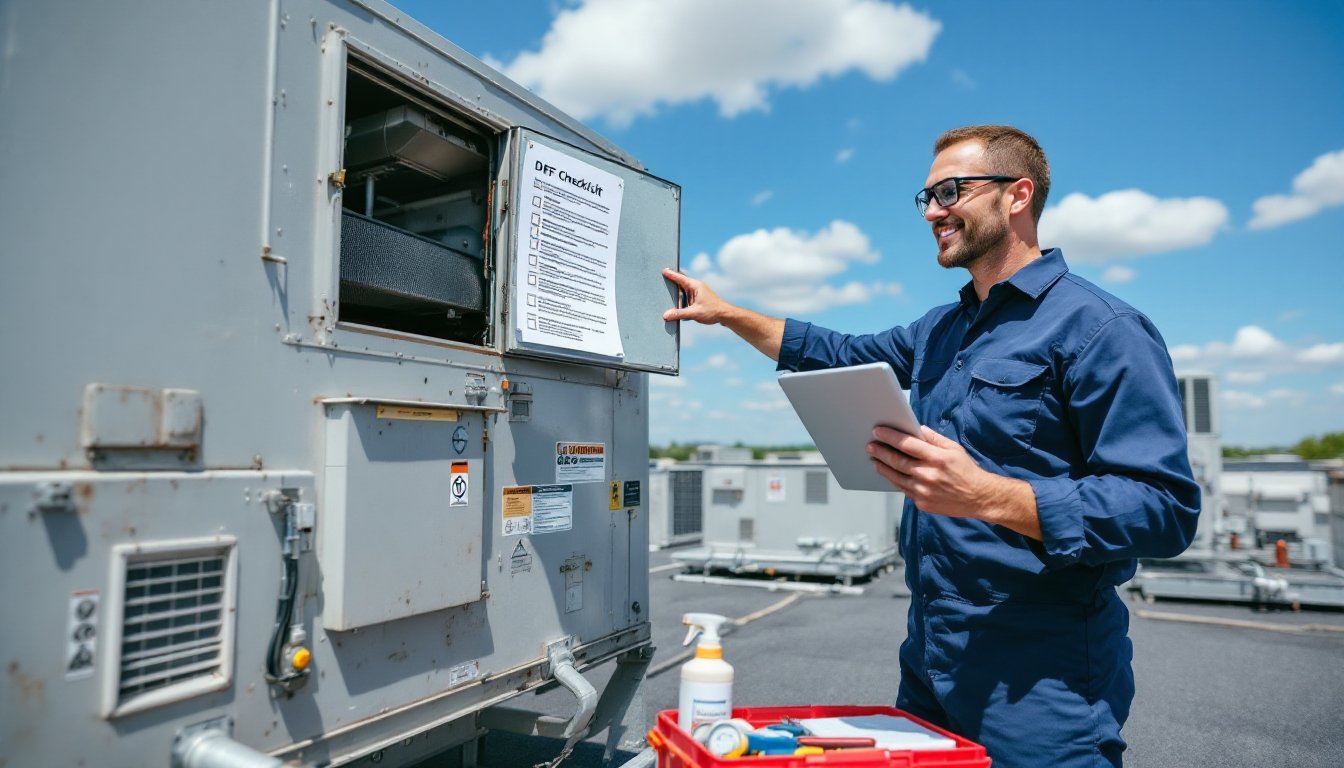
A PDF checklist provides portability, consistency, and a permanent record for warranty claims and audits. Build a template that technicians can complete on a tablet or print and file.
Structure the Checklist by Frequency
Divide the PDF into monthly, quarterly, and annual sections. Include checkboxes, date fields, and space for notes. For each task, list the tool required (e.g., multimeter, fin comb, coil cleaner) and the acceptance criteria (e.g., “belt deflection ½ inch,” “suction pressure 68–72 psi”).
Include Equipment-Specific Data
Add fields for unit make, model, serial number, and location (e.g., “RTU-3, East Roof”). Reference nameplate data for voltage, amperage, refrigerant type (R-410A, R-22), and charge weight.
Embed Safety Reminders
List required personal protective equipment (PPE) at the top of each section: safety goggles, gloves, hearing protection for work near running equipment. Include lockout/tagout (LOTO) warnings for tasks involving electrical disconnects.
Track Findings and Actions
Provide space to log issues (“Condenser coil 40% blocked”), corrective actions (“Cleaned coil, straightened fins”), and parts used (“Replaced 16×25×2 filter, MERV 11”). This creates a service history that helps diagnose recurring problems.
Digital vs. Paper
Digital PDFs work well with apps like Adobe Fill & Sign or cloud-based maintenance software. Paper copies are backup options when tablets aren’t practical (rooftop work in extreme weather). Either way, store completed checklists for at least five years to satisfy warranty and code requirements.
Teams looking to organize multiple maintenance checklist templates can adapt industry-standard formats and customize fields for their equipment mix.
Common HVAC Issues Preventable Through Regular Maintenance
Most emergency HVAC calls stem from neglected maintenance. Here’s what a checklist prevents.
Compressor Failure
Dirty coils, low refrigerant, and electrical issues account for most compressor burnouts. A replacement compressor costs $1,500 to $3,000 in parts alone, plus labor. Monthly coil checks and annual refrigerant testing catch these problems early.
Frozen Evaporator Coils
Restricted airflow (dirty filters, blocked return vents) or low refrigerant cause coils to ice over. The system stops cooling, and melting ice floods drain pans. Filter changes and airflow checks prevent this.
Blower Motor Burnout
Dust-caked blower wheels force motors to work harder, overheating windings and shortening life. Quarterly cleaning and bearing lubrication extend motor life from 8 years to 15+.
Refrigerant Leaks
Small leaks worsen over time, reducing capacity and efficiency. Annual pressure tests and leak detection (electronic sniffers or UV dye) identify problems before refrigerant drops to critical levels.
Thermostat Malfunctions
Drift, dead batteries, or dust in mechanical contacts cause erratic operation. Monthly calibration checks and battery replacements keep zones comfortable.
Drainage Backups and Water Damage
Clogged condensate lines overflow, damaging ceilings, walls, and flooring. A monthly vinegar flush costs pennies and prevents thousands in water damage.
Property owners using structured maintenance tips report fewer emergency calls and lower operating costs. Smart home systems from providers like Digital Trends now integrate HVAC monitoring, alerting teams to filter changes and abnormal run times.
For professional guidance on complex repairs or system evaluations, platforms like HomeAdvisor connect building owners with licensed HVAC contractors who can handle diagnostics and code-compliant installations. General home upkeep resources are also available through sites like Today’s Homeowner, covering a range of property maintenance topics.
Conclusion
A commercial HVAC maintenance checklist isn’t optional, it’s the difference between predictable upkeep and catastrophic failure. Monthly filter changes, quarterly coil cleaning, and annual inspections by licensed technicians keep systems efficient, extend equipment life, and protect warranty coverage. Build a PDF that fits your equipment, train your team to use it consistently, and store records for audits and claims. The time invested in routine maintenance pays back in lower energy bills, fewer emergency repairs, and decades of reliable service.