Table of Contents
ToggleTar and gravel roofs, also known as built-up roofing (BUR), have been protecting commercial and residential flat roofs for over a century. They’re durable, cost-effective, and UV-resistant, but they demand regular upkeep to hit their 20- to 30-year lifespan. Neglect them, and you’re looking at ponding water, membrane failures, and interior leaks that cost thousands to fix. Whether you inherited one on a mid-century ranch or a detached garage, understanding what these roofs need and when to climb the ladder yourself versus calling a pro can save serious money and headaches.
Key Takeaways
- Tar and gravel roofs can last 20–30 years when properly maintained, but neglect leads to costly membrane failures, ponding water, and interior leaks.
- Twice-yearly inspections checking for ponding water, gravel displacement, alligatoring, and flashing failures are essential to catch problems early before they require expensive professional repairs.
- DIY-friendly tar and gravel roof maintenance includes clearing debris, flushing drains, and redistributing gravel, while blistering, active leaks, widespread cracks, and structural issues require licensed roofing professionals.
- Proper drainage with a minimum ¼” slope per foot is critical—persistent ponding accelerates bitumen breakdown and should prompt consultation with a roofer about tapered insulation retrofits.
- A professional flood coat renewal when surface cracks first appear can add 5–10 years of life for far less cost than waiting until leaks develop and damage the underlying deck.
- Maintain a detailed maintenance log with photos and contractor invoices to document roof care, which protects insurance claims and proves proper stewardship when selling your home.
What Makes Tar and Gravel Roofs Unique
A tar and gravel roof consists of alternating layers of roofing felt (ply sheets) and hot asphalt or coal tar, topped with a flood coat of bitumen and embedded gravel. The gravel, typically ⅜” to ½” crushed stone, protects the underlying membrane from UV degradation, impact, and fire.
This type of built-up roof membrane is fundamentally different from single-ply systems like EPDM or TPO. BUR relies on redundancy: three to five plies of felt create a thick, waterproof barrier. The hot-mopped bitumen bonds each layer, forming a monolithic seal. That’s why installers need torches, mops, and kettles, it’s not a roll-and-stick operation.
Key advantages:
- UV resistance: Gravel reflects sunlight and shields the tar from oxidation.
- Impact durability: The aggregate layer absorbs hail and foot traffic better than exposed membranes.
- Proven lifespan: Properly maintained BUR systems routinely last 20–30 years, sometimes longer.
Trade-offs:
- Weight: A gravel roof adds 5–6 pounds per square foot. Framing must support the load per the International Residential Code (IRC).
- Drainage sensitivity: Flat or low-slope roofs (less than 2:12 pitch) need functional drains and scuppers. Any pooling accelerates membrane breakdown.
- Repair complexity: Locating leaks beneath gravel requires excavation and professional diagnostic tools like infrared scanning.
Understanding this layered construction is critical. You can’t slap on a patch like asphalt shingles, you’re working with a system that depends on proper heat application and ply adhesion.
Essential Seasonal Maintenance Tasks
Inspecting for Common Problems
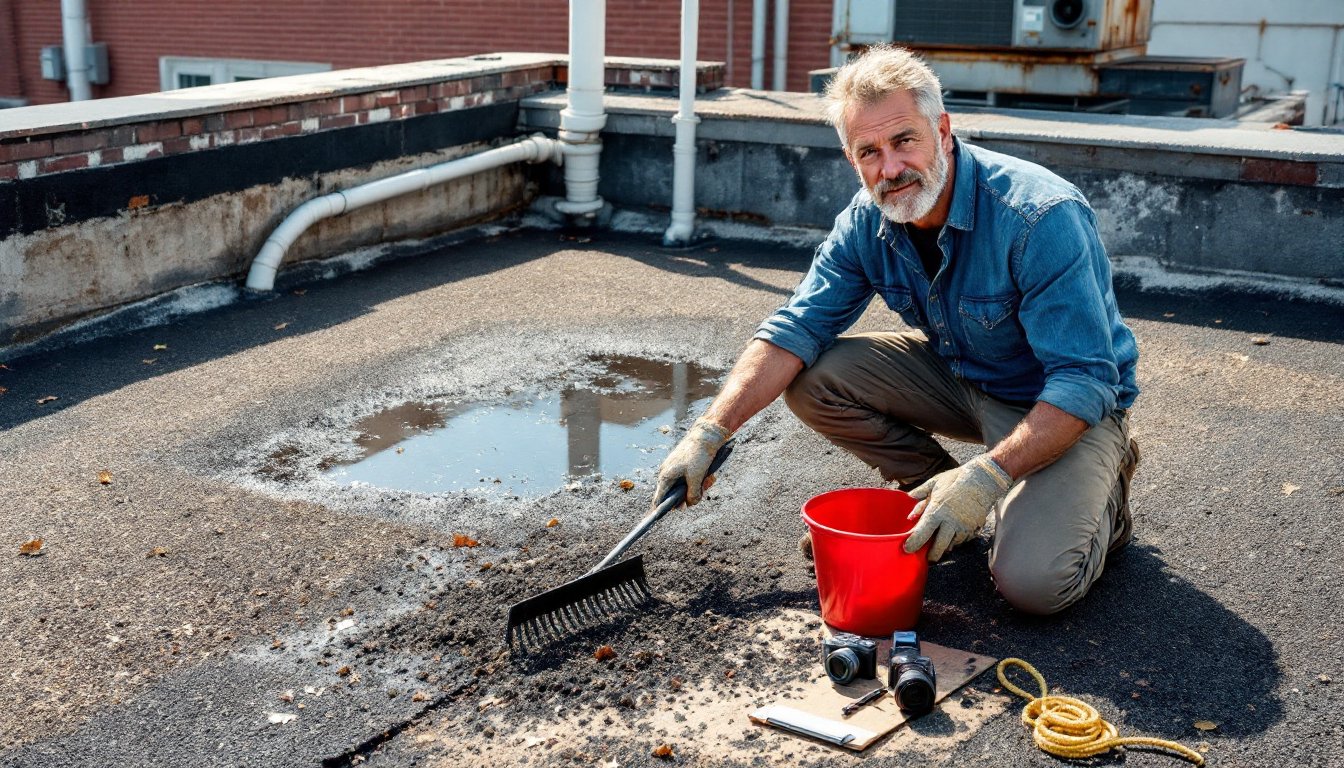
Schedule inspections twice a year, spring and fall, plus after major storms. Bring a notebook, camera, tape measure, and flashlight. You’re documenting issues, not fixing them on the spot.
What to look for:
- Ponding water: Any standing water 48 hours after rain signals inadequate slope or clogged drains. Mark locations and depths.
- Gravel displacement: Bare spots expose the bitumen flood coat to UV. Note areas where stone has migrated or washed away.
- Surface cracks (alligatoring): Fine cracks resembling reptile skin mean the top bitumen layer is drying out. Early stages are manageable: deep cracks require professional re-coating.
- Blistering: Raised bubbles indicate trapped moisture or air between plies. Small blisters (under 1″ diameter) can wait: larger ones risk rupture and leaks.
- Flashing failures: Check all penetrations, vents, HVAC curbs, parapet walls. Pull-away or rust on metal flashing is a fast track to interior water damage.
- Seam ridges: Wrinkles or ridges at ply overlaps can telegraph wear. Run your hand across them, sharp edges or separation means the bitumen bond is failing.
Wear fall protection if the roof is over 6 feet high or has no parapet. A safety harness anchored to a structural tie-off isn’t overkill, it’s OSHA-compliant common sense.
Cleaning and Debris Removal
Debris isn’t just ugly, it traps moisture, clogs drains, and accelerates membrane rot. Clean at least twice yearly, or quarterly if you’re under heavy tree cover.
Step-by-step process:
- Clear large debris by hand: Remove leaves, branches, and trash. A leaf blower works for dry material, but wet leaves need a rake or hands.
- Rake gravel back into bare spots: Use a garden rake to redistribute displaced stone evenly. Don’t expose the flood coat, consistent coverage is critical.
- Flush drains and scuppers: Remove drain covers and pull out any blockages. Run water from a hose to confirm flow. Sluggish drains need rodding or professional clearing.
- Trim overhanging branches: Keep tree limbs at least 6 feet clear. Falling branches puncture membranes, and constant leaf drop overwhelms drainage.
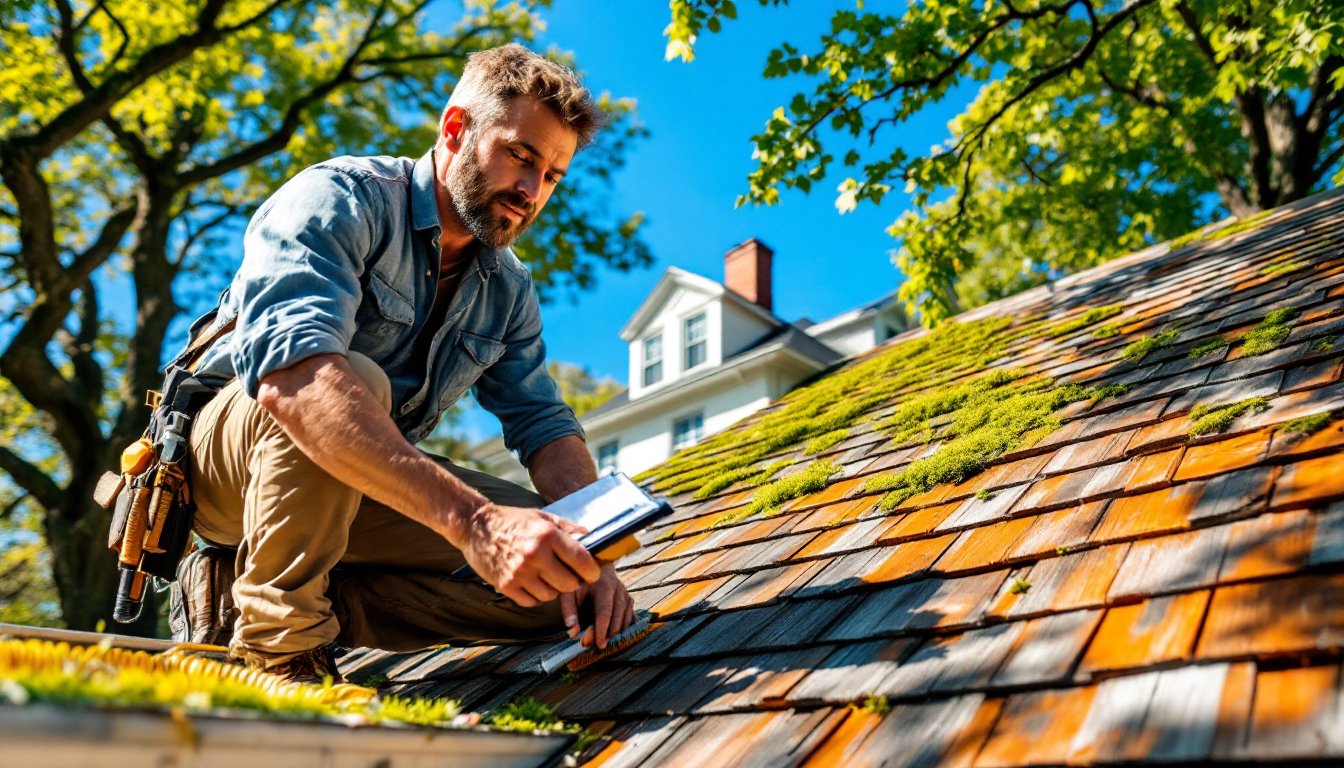
- Check for organic growth: Moss and algae hold moisture against the membrane. Scrub with a stiff brush and water, skip power washers, which can dislodge gravel and damage the bitumen.
Safety note: Always work with a partner. Flat roofs lack the visual cues of pitched surfaces, making edges and roof-level HVAC units fall hazards. Wet gravel is slippery, wear rubber-soled boots with good tread.
Many homeowners handle these tasks themselves, and resources like Family Handyman offer additional tutorials on routine roof maintenance and safety practices for DIY projects.
When to Call a Professional vs. DIY Repairs
DIY-friendly tasks:
- Redistributing gravel to cover bare spots
- Clearing drains and gutters
- Applying roof cement to small cracks (under 2″ long) in the flood coat
- Resealing minor gaps around non-structural penetrations like vent pipes
For spot repairs, use asphalt roof cement (not driveway sealer). Clean the area, apply a ¼” layer, and embed a patch of fiberglass mesh if the crack is near a seam. Top with another cement layer and sprinkle matching gravel over wet cement. Let cure 24–48 hours.
When to call a licensed roofer:
- Blisters larger than 3″: Cutting and patching requires hot tar or torch application. DIY attempts often create new leaks.
- Active leaks: Water intrusion means subsurface membrane failure. Professionals use infrared thermography to locate breaches under gravel, guessing wastes time and materials.
- Ponding water over 1″ deep: This indicates structural sagging or inadequate slope. Solutions range from adding tapered insulation to re-decking, both beyond DIY scope.
- Widespread alligatoring: If cracks cover more than 20% of the roof, you’re looking at a flood coat renewal or full replacement. Hot-mopped bitumen needs licensed applicators and permits in most jurisdictions.
- Flashing repairs at parapet walls or HVAC curbs: These intersections are leak-prone and require proper detailing per manufacturer specs and local codes.
- Any structural concerns: Sagging decking, compromised joists, or framing issues require engineering evaluation.
Permit considerations:
Cosmetic repairs (cement patches, gravel redistribution) rarely need permits. Re-coating or replacing more than 25% of the roof surface typically does, per IRC Chapter 15. Requirements vary, check with your local building department before starting work that involves torches, structural changes, or new membrane layers.
For complex diagnostic work and advanced techniques, Fine Homebuilding covers professional-grade construction methods and building science principles that explain why certain repairs need expert hands.
Extending the Lifespan of Your Tar and Gravel Roof
Drainage is everything. A properly sloped roof (minimum ¼” per foot toward drains) sheds water. Anything less invites ponding, which breaks down bitumen through freeze-thaw cycles and UV exposure. If you’re seeing persistent puddles, consult a roofer about tapered insulation retrofits or additional drains.
Recoat before you leak. When surface cracks first appear, a professional flood coat renewal, a fresh layer of hot bitumen and gravel, adds 5–10 years for a fraction of replacement cost. Wait until leaks start, and you’re paying for deck repairs and interior damage on top of roofing work.
Traffic management matters. Limit foot traffic to necessary maintenance. Every trip across the roof grinds gravel into the bitumen and risks punctures. If HVAC techs or chimney sweeps need access, establish a walking path using ¾” plywood walkway boards to distribute weight.
Address vegetation immediately. Tree roots can infiltrate roof drains, and seedlings sprout in debris-filled corners. A single sapling’s roots will tear through plies in a season. Inspect quarterly if you have overhanging trees.
Document everything. Keep a maintenance log with photos, repair dates, and contractor invoices. When it’s time to sell or file an insurance claim, this record proves you maintained the roof properly, and can mean the difference between coverage and denial.
Consider a roof coating system as the membrane ages. Acrylic or silicone elastomeric coatings (applied over the existing gravel and bitumen after proper prep) can extend life another 10–15 years. These are professional applications requiring surface primers and specific mil thickness per manufacturer specs, but they’re cheaper than tear-off and replacement.
Monitor interior ceilings. Water stains, peeling paint, or musty odors below the roof mean you’ve already got a leak. Don’t wait for drips, by then, insulation is soaked and decking may be rotting. Catch problems on the roof before they show up inside.
Conclusion
Tar and gravel roofs reward consistent attention. Twice-yearly inspections, prompt debris removal, and addressing small issues before they become leaks will push these systems well into their third decade. Know your limits, gravel redistribution and drain clearing are weekend tasks, but membrane repairs and structural concerns need licensed pros. Stay on top of drainage, document your work, and you’ll get every year of service these old-school roofs have to offer.