Table of Contents
ToggleCommercial air conditioning isn’t a set-it-and-forget-it system. A well-maintained unit runs quieter, costs less to operate, and won’t fail during the hottest week of summer when replacement parts are backordered. Neglect leads to compressor failure, refrigerant leaks, and emergency service calls that cost 3–5 times more than scheduled maintenance. This guide walks through what needs attention, how often, and which tasks building managers or facility staff can handle versus what requires a licensed HVAC technician.
Key Takeaways
- Regular commercial air conditioner maintenance prevents costly emergency repairs that can run 3–5 times more than scheduled tune-ups and keeps systems 10–15% more energy-efficient than neglected units.
- Schedule two professional HVAC service visits annually (before cooling and heating seasons), with high-use environments like restaurants and data centers requiring quarterly or monthly inspections to avoid downtime.
- Building managers can safely handle filter replacements, condensate drain cleaning, coil fin straightening, and condenser debris removal, but refrigerant work, electrical repairs, and diagnostics require a licensed EPA-certified HVAC technician.
- Dirty condenser and evaporator coils reduce heat transfer efficiency by 15–30% and should be cleaned annually or twice yearly in dusty climates using appropriate coil cleaners and proper pressure techniques to avoid fin damage.
- Budget $500–$800 annually per commercial AC unit for maintenance to protect equipment, inventory, regulatory compliance, and avoid costly component failures like compressor replacements that can exceed $2,000.
Why Regular Maintenance Is Critical for Commercial HVAC Systems
Commercial AC units cycle more frequently and handle greater thermal loads than residential systems. A 5-ton rooftop unit (RTU) serving a retail space might run 12–16 hours daily during cooling season, moving 2,000 CFM of air through ductwork that collects dust, pollen, and debris.
Skipped maintenance compounds quickly. Dirty coils reduce heat transfer efficiency by 15–30%, forcing the compressor to work harder and draw more amperage. That extra load shortens component lifespan and drives up electric bills. According to studies on seasonal maintenance routines, systems with annual tune-ups use 10–15% less energy than neglected units.
Refrigerant leaks are another expensive consequence. Commercial systems often use R-410A or newer refrigerants like R-32, which cost $50–$150 per pound depending on market conditions and regional supply. A slow leak in a 15-pound charge can waste hundreds of dollars before the system refuses to cool. Early detection during routine service prevents both refrigerant loss and compressor damage from low-pressure operation.
Downtime hits harder in commercial settings. A failed AC in a server room, medical office, or restaurant isn’t just uncomfortable, it threatens equipment, inventory, or regulatory compliance. Preventive maintenance catches worn contactors, failing capacitors, and frayed wiring before they cause shutdowns.
Key Components of a Commercial AC Maintenance Checklist
A thorough maintenance visit addresses airside components, refrigerant system health, electrical connections, and controls. Here’s what professionals inspect and what facility staff should monitor between service calls.
Filter Replacement and Airflow Inspection
Filters are the first line of defense against airflow restriction. Commercial systems typically use 2-inch pleated filters rated MERV 8–13 for general applications or MERV 14–16 in healthcare or cleanroom environments. Check filters monthly, more often in dusty conditions or high-occupancy spaces.
Clogged filters starve the evaporator coil of airflow, causing the coil to ice over and the compressor to short-cycle. Replace filters when they show visible dirt buildup or when static pressure across the filter rack exceeds manufacturer specs (usually measured with a manometer if your system has test ports).
Inspect supply and return grilles for obstructions. Stacked boxes, furniture, or ceiling tile debris can block airflow and create hot spots. Walk the space and verify that dampers in VAV (variable air volume) boxes move freely if your system uses zoned control.
Check blower motor amp draw against the nameplate rating. A motor pulling 10–15% over rated amps indicates bearing wear or a failing capacitor. Listen for unusual noise, squealing suggests a worn belt (if belt-driven), while grinding points to bad bearings.
Condenser and Evaporator Coil Cleaning
Condenser coils (outdoor units or remote condensers) accumulate cottonwood seeds, leaves, grass clippings, and airborne grime. Dirty coils can’t reject heat efficiently, causing high head pressure and forcing the compressor into thermal overload.
Clean condenser coils annually in moderate climates, twice yearly in dusty or high-pollen areas. Use a coil cleaner formulated for aluminum fins (acidic cleaners for heavy grease in restaurant applications, alkaline for general use). Spray from the inside out to push debris away from the coil, then rinse thoroughly with a garden hose at moderate pressure. High-pressure washers bend fins.
Straighten bent fins with a fin comb, available in 8, 10, 12, 14, and 15 fins-per-inch sizes. Match the comb to your coil’s fin spacing. Bent fins reduce airflow by up to 30%.
Evaporator coils (indoor air handler) collect dust and biological growth if moisture lingers. Dirty evaporator coils restrict airflow and reduce latent cooling capacity, leaving spaces feeling clammy. Access typically requires removing panels and may involve refrigerant line work, so coil cleaning is usually a professional task. Some systems have coil access doors that allow spray-on, no-rinse foaming cleaners to be applied without disassembly.
Check the condensate drain pan and line during every filter change. A clogged drain causes water backup, potential ceiling damage, and microbial growth. Pour a cup of diluted bleach or condensate pan tablets into the drain line quarterly to prevent algae buildup. If the system has a condensate pump, verify it cycles properly and the reservoir doesn’t overflow.
How Often Should Commercial Air Conditioners Be Serviced?
Frequency depends on runtime, environment, and equipment age. Most manufacturers and HVAC trade groups recommend two professional service visits per year, one before cooling season (April–May) and one before heating season if the system includes heat pumps or packaged units with gas heat.
High-use environments demand more attention. A restaurant with kitchen exhaust pulling conditioned air needs quarterly service. Data centers running 24/7 at full load benefit from monthly inspections. Light commercial spaces (small offices, retail) with moderate runtime can sometimes stretch to annual service if filters are changed religiously.
Between professional visits, assign someone to check filters monthly, inspect drain pans, and listen for unusual sounds. Many commercial maintenance checklists include weekly walk-throughs to catch obvious problems before they escalate.
Log all service in a maintenance binder or digital system. Record filter changes, refrigerant pressures, amp draws, and any repairs. This history helps technicians spot trends (like slowly declining airflow or rising superheat) and supports warranty claims if major components fail.
Don’t skip pre-season tune-ups to save money. Emergency service rates run $150–$250 per hour versus $100–$150 for scheduled maintenance, and expedited parts cost more. A $300 spring tune-up often prevents a $2,000 compressor replacement.
DIY Maintenance Tasks vs. Professional Service Needs
Building managers and facility staff can handle routine tasks that don’t involve refrigerant, electrical, or structural work. Anything beyond these basics requires a licensed HVAC technician with EPA Section 608 certification for refrigerant handling.
Safe for in-house staff:
- Changing filters (turn off unit first, note airflow direction arrows)
- Cleaning condensate drain pans and flushing drain lines with pan tablets or bleach solution
- Removing debris from around outdoor condenser units (maintain 24-inch clearance)
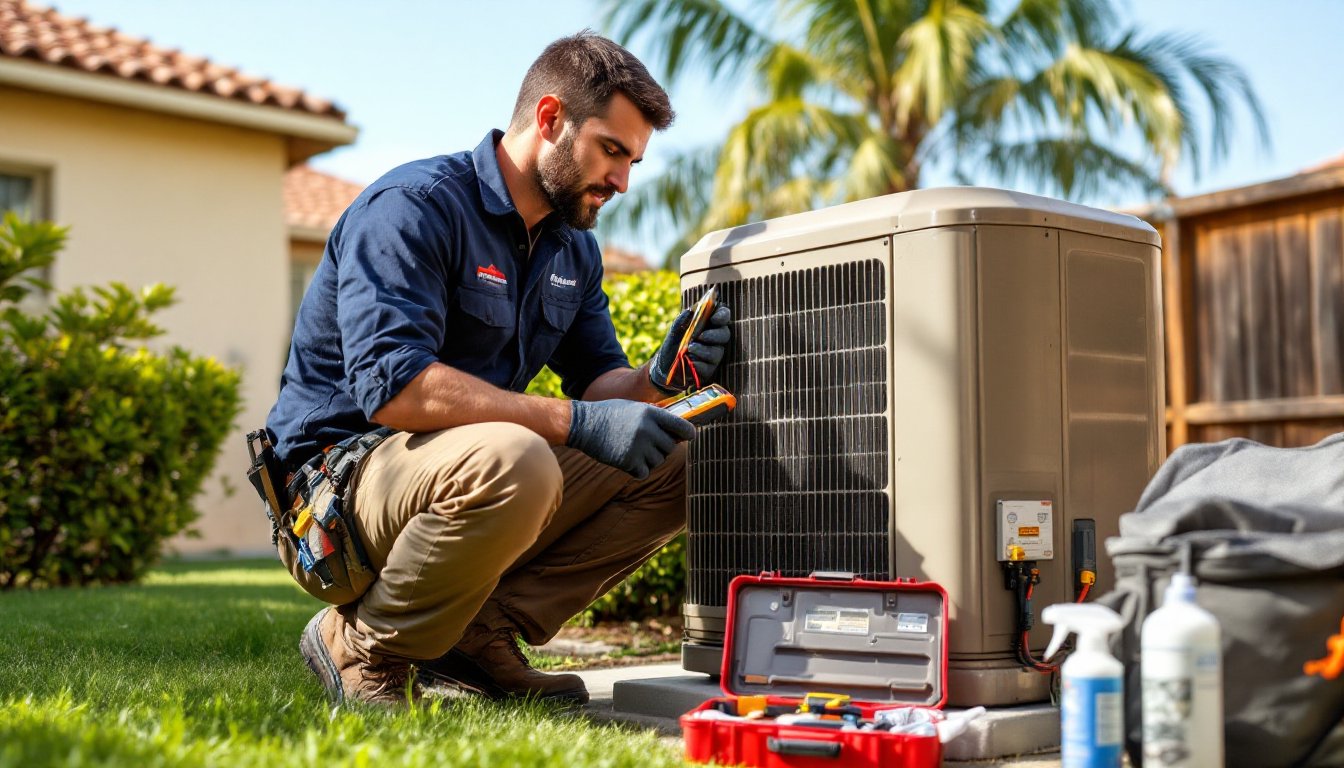
- Hosing off condenser coils (low to moderate pressure, coil cleaner if needed)
- Straightening coil fins with a fin comb
- Visual inspection of ductwork for leaks, disconnected joints, or insulation damage
- Checking thermostat operation and replacing batteries in wireless sensors
- Verifying that supply and return grilles aren’t blocked
- Recording runtime and noting unusual sounds or odors
Wear appropriate PPE: safety glasses, work gloves, and a dust mask when handling filters or cleaning coils. If using chemical coil cleaners, add chemical-resistant gloves and ensure adequate ventilation.
Requires a licensed professional:
- Checking refrigerant charge, pressures, subcooling, and superheat
- Recovering, adding, or reclaiming refrigerant (EPA regulations and environmental law)
- Testing and replacing capacitors, contactors, relays, and transformers
- Measuring and adjusting airflow (CFM) to manufacturer specs
- Inspecting and tightening electrical connections (live voltage work)
- Combustion analysis and gas valve adjustment on packaged units with furnaces
- Diagnosing control board faults and reprogramming economizer controls
- Pressure-testing refrigerant lines for leaks
- Replacing compressors, expansion valves, or reversing valves
- Any work on rooftop units requiring fall protection or structural access
Some jurisdictions require permits for replacing major components or altering ductwork. Check with your local building department. The International Mechanical Code (IMC) and International Energy Conservation Code (IECC) govern commercial HVAC installations and modifications.
When hiring professionals, ask for commercial AC repair services with verifiable references and proof of liability insurance. Get itemized quotes and compare labor rates, which vary widely by region. Expect $100–$150 per hour in the Midwest, $150–$200 in coastal metros. Flat-rate pricing for tune-ups typically runs $250–$400 depending on unit size and complexity.
Conclusion
Commercial AC maintenance isn’t optional if you want reliable cooling and manageable operating costs. Filter changes, coil cleaning, and drain line flushes keep systems running between professional visits, but don’t skip the twice-yearly tune-up. Budget $500–$800 annually per unit for maintenance, it’s cheaper than replacing a compressor or dealing with a summer shutdown when tenants or customers are sweating.