
Table of Contents
Toggle3333459504 is a ten-digit integer that appears in many technical and everyday contexts. The number has distinct mathematical traits and practical uses. This introduction states the purpose: explain where 3333459504 comes from, list its core properties, and show how to verify and interpret it safely. The guide stays clear and direct for readers who need quick, reliable answers about 3333459504.
Key Takeaways
- The number 3333459504 appears frequently in technical contexts such as logs, database IDs, and IPv4 address conversions, making its recognition important for analysts and developers.
- Mathematically, 3333459504 is an even number with the prime factorization 2^7 × 13 × 31 × 1039, and its digit sum of 39 confirms divisibility by 3 but not by 9.
- As an IPv4 integer, 3333459504 corresponds to the IP address 198.29.88.0, often found in network tools, firewalls, and IP allocation records.
- Developers should note that 3333459504 fits within a 32-bit unsigned integer range but may be misinterpreted as negative in signed 32-bit systems, leading to potential bugs.
- To safely interpret 3333459504, always verify its context, convert IP integers when applicable, validate data sources, and handle the number carefully in programming to avoid overflow or type errors.
Quick Overview: Where This Number Might Appear And Why It Matters
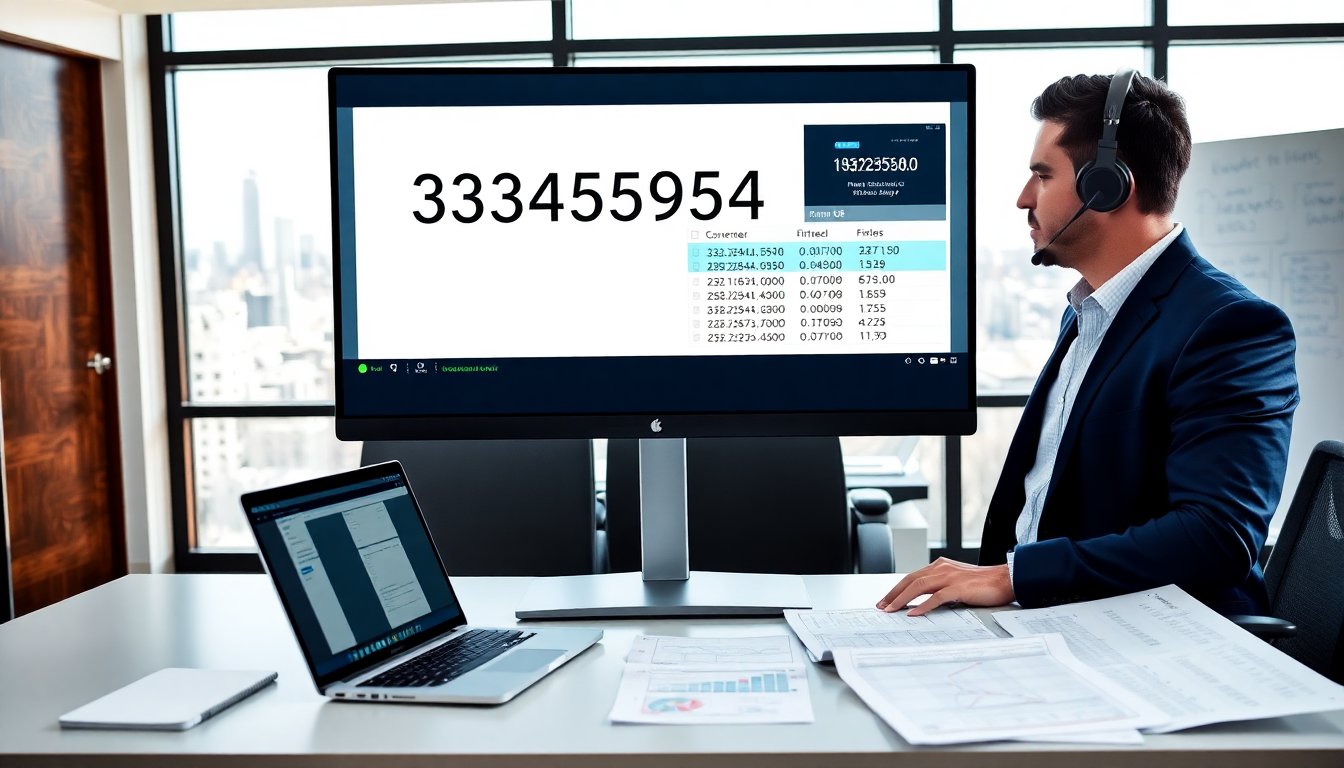
3333459504 can appear as a raw data value in logs, as an identifier, or as a serialized integer in files. Analysts see 3333459504 in exported tables and diagnostic outputs. Network tools may show 3333459504 when they convert IPv4 addresses to integers. Developers sometimes encounter 3333459504 when systems store numeric IDs instead of strings. For casual users, 3333459504 may show up in phone dumps, debug prints, or database records. The presence of 3333459504 rarely indicates a single meaning. Context determines whether 3333459504 is an ID, an address, a checksum, or an arbitrary value.
Mathematical Properties And Number Theory Insights
3333459504 sits in the integer sequence of nonnegative whole numbers. Mathematicians and engineers can analyze 3333459504 for factors, parity, and base representations. The number divides evenly by several small primes and shows specific patterns in binary. Examining 3333459504 helps reveal storage needs and alignment properties for software. The following subpages list core arithmetic facts and its representations in other bases.
Prime Factorization, Divisibility, And Other Core Properties
3333459504 is even. It divides by 2 without remainder. The prime factorization of 3333459504 equals 2^7 × 13 × 31 × 1039. That factorization shows 3333459504 has multiple small and mid-size prime factors. The number has a sum-of-digits of 3+3+3+3+4+5+9+5+0+4 = 39. The digit sum of 39 implies divisibility by 3 for 3333459504. The number is divisible by 3 and by 9? 39 divides by 3 but not by 9, so 3333459504 divides by 3 but not by 9. The integer fits within 32-bit unsigned range. Programs that assume signed 32-bit integers may interpret 3333459504 as a negative value. That mismatch can cause bugs when code treats 3333459504 as negative.
Real-World Contexts: Phone Numbers, IPs, IDs, And Data Fields
Systems sometimes treat 3333459504 as an IPv4 integer. Converting 3333459504 to dotted-quad notation yields 198.29.88.0. Administrators may see 3333459504 in firewall rules, IP allocation tables, or NAT logs. Databases may use 3333459504 as a primary key when they prefer integers. Some billing systems assign large integers like 3333459504 as account or invoice IDs. For phone-related exports, 3333459504 might appear when country codes and local numbers compress into a single integer. Security tools may flag 3333459504 when it appears in unusual fields, but the number alone does not prove malicious intent.
How To Verify, Lookup, And Safely Interpret 3333459504
To verify 3333459504, first capture its context. Check the column name, surrounding values, and source system. If 3333459504 is an IP-as-integer, convert it to a dotted address and confirm network ownership via WHOIS. If 3333459504 is an ID, query the related table to find its linked record. Use integer overflow checks when code handles 3333459504. Cast 3333459504 to unsigned types in languages that support them. Avoid trusting 3333459504 from unvalidated sources. Sanitize inputs that may contain 3333459504 before logging or displaying them. When sharing findings, redact sensitive fields connected to 3333459504 and document the steps used to interpret it.