
Table of Contents
ToggleMaintenance checklists prevent costly breakdowns and keep equipment running smoothly. A well-designed checklist helps technicians complete tasks consistently, reduces human error, and extends asset lifespan. Whether managing a manufacturing facility, rental property, or vehicle fleet, knowing how to create maintenance checklists saves time and money. This guide covers the essential components, step-by-step building process, and proven practices that make checklists actually work in real-world settings.
Key Takeaways
- Maintenance checklists prevent costly equipment failures by standardizing inspections and catching small issues before they become major breakdowns.
- Effective checklists include clear asset identification, specific task descriptions, acceptance criteria, safety requirements, and signature fields for accountability.
- Build your maintenance checklist by gathering manufacturer documentation, interviewing experienced technicians, and reviewing past failure history to capture critical procedures.
- Write each task as a specific, actionable item—vague instructions like “check oil” lead to interpretation errors and inconsistent results.
- Train all technicians on checklist use, make forms easily accessible, and enforce completion through regular audits to ensure consistent implementation.
- Review and update maintenance checklists at least annually to reflect equipment changes, new manufacturer recommendations, and lessons learned from breakdowns.
Why Maintenance Checklists Matter
Equipment failure costs businesses an estimated $50 billion annually in the United States alone. Maintenance checklists directly address this problem by standardizing inspections and repairs.
Here’s what makes them essential:
Consistency across teams. Different technicians follow the same steps every time. This eliminates the “I forgot to check that” scenarios that lead to breakdowns.
Reduced downtime. Scheduled maintenance catches small issues before they become major failures. A loose belt noticed during a routine check costs far less than a seized motor discovered during production.
Compliance documentation. Many industries require proof of regular maintenance. Checklists create automatic records that satisfy OSHA, FDA, and other regulatory requirements.
Knowledge preservation. When experienced technicians retire or leave, their institutional knowledge walks out the door. Maintenance checklists capture critical procedures so new team members can perform at the same level.
Accountability. Signed and dated checklists show exactly who performed what tasks and when. This clarity helps managers identify training gaps and verify work completion.
Key Components of a Maintenance Checklist
Effective maintenance checklists share common elements. Missing any of these reduces the checklist’s usefulness.
Asset Identification
Every checklist needs clear asset information at the top. Include the equipment name, model number, serial number, and location. Technicians should never wonder which machine the checklist applies to.
Task Descriptions
Write each task as a specific action. “Check oil” is vague. “Verify oil level is between min and max marks on dipstick” is actionable. Precise language prevents interpretation errors.
Frequency Schedule
Maintenance checklists specify when tasks occur, daily, weekly, monthly, quarterly, or annually. Some items need attention every shift: others only during annual shutdowns.
Acceptance Criteria
Each task needs pass/fail standards. What temperature range is acceptable? What vibration level signals a problem? Quantifiable criteria remove guesswork.
Safety Requirements
List required personal protective equipment and lockout/tagout procedures. Maintenance checklists should keep workers safe, not just equipment.
Space for Notes
Technicians often notice things outside the checklist scope. A notes section captures observations about unusual wear, strange sounds, or upcoming concerns.
Signature and Date Fields
Documentation means nothing without accountability. Every completed checklist needs a technician signature and completion date.
Steps to Build Your Own Checklist
Creating maintenance checklists from scratch takes effort upfront but pays dividends long-term. Follow these steps for best results.
Step 1: Gather equipment documentation.
Start with manufacturer manuals. They contain recommended maintenance intervals, specifications, and common failure points. This information forms the foundation of any good checklist.
Step 2: Interview technicians.
The people who work on equipment daily know its quirks. Ask them what breaks frequently, what warning signs appear before failures, and what checks they perform instinctively. Maintenance checklists improve when they capture this hands-on experience.
Step 3: Review failure history.
Look at past work orders and breakdown reports. Patterns reveal where standard checklists need extra attention. If a pump fails every six months, increase inspection frequency.
Step 4: Organize tasks logically.
Group related items together. A technician shouldn’t walk to one end of a machine, then the other, then back to the first spot. Arrange tasks in a physical flow that saves time.
Step 5: Set realistic time estimates.
Maintenance checklists that take too long get rushed or skipped. Test your draft with actual technicians and adjust the scope if needed. A shorter, completed checklist beats an ambitious, ignored one.
Step 6: Create the format.
Digital checklists on tablets work well for some environments. Paper forms suit others. Choose a format that matches where and how technicians work.
Step 7: Test and revise.
Run the checklist through several cycles before finalizing. Collect feedback and make adjustments. Maintenance checklists evolve as equipment and conditions change.
Best Practices for Using Maintenance Checklists
Even well-designed maintenance checklists fail without proper implementation. These practices maximize their effectiveness.
Train everyone who uses them. Don’t assume technicians understand every item. Walk through the checklist, explain the reasoning behind each task, and demonstrate proper techniques.
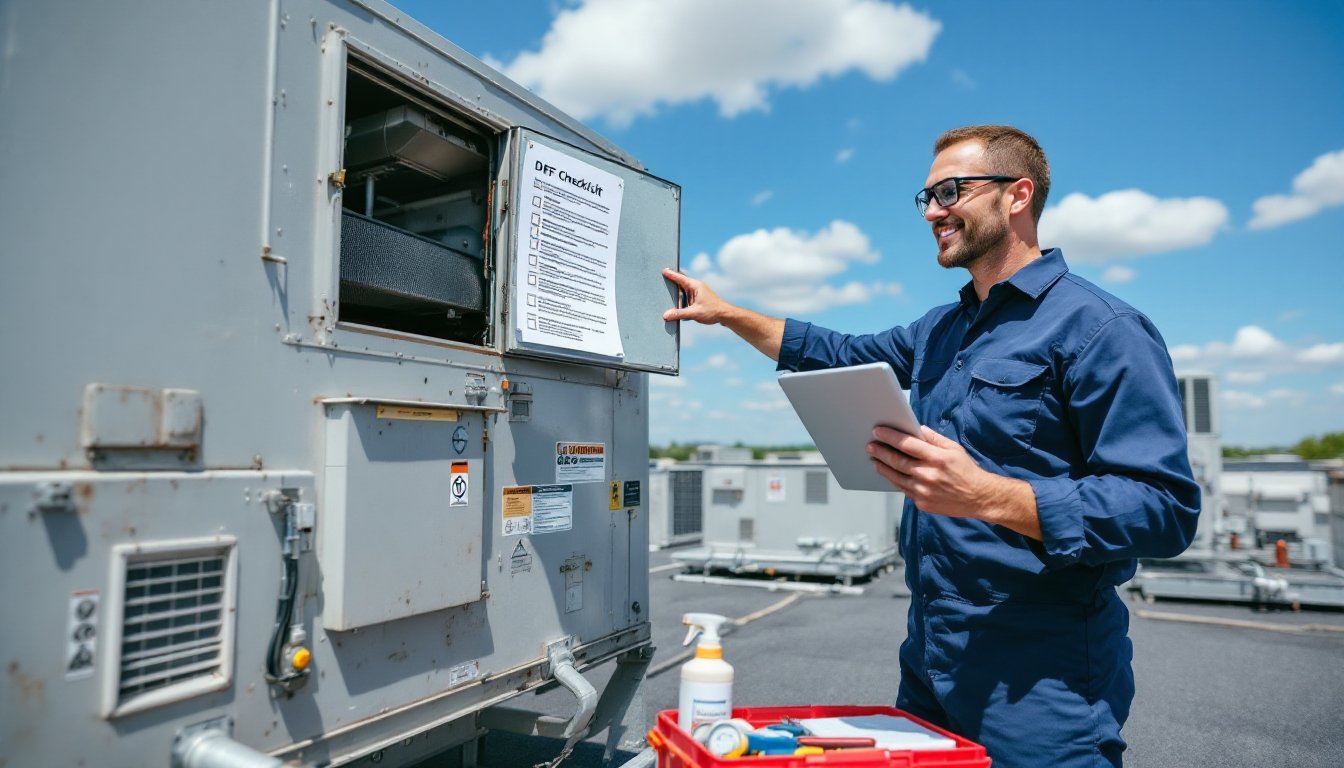
Make checklists accessible. Store them where technicians need them, mounted near equipment, saved on mobile devices, or available through your CMMS. If finding the checklist takes effort, people skip it.
Enforce completion. Checklists only work when people use them. Supervisors should verify that scheduled maintenance happens. Periodic audits catch shortcuts before they cause problems.
Review and update regularly. Equipment ages. Parts get replaced. Manufacturers issue new recommendations. Maintenance checklists need annual reviews at minimum. More frequent updates make sense after breakdowns or modifications.
Track completion data. Which tasks consistently fail? Which items get marked as exceptions? This data reveals maintenance trends and helps prioritize capital spending.
Connect checklists to work orders. When a checklist inspection finds a problem, the repair process should start automatically. Gaps between discovery and action cost money.
Keep it simple. Add items only when they serve a purpose. Bloated checklists cause fatigue. Technicians start checking boxes without actually performing tasks. Each item should justify its place.